

In August 2020, then-Sen. Marco Rubio and several of his colleagues urged the first Trump administration to force Al Jazeera to register under the Foreign Agents Registration Act. A month later, Trump’s Department of Justice granted their request.
The largely Republican coalition argued that Qatar created unspecified security risks by funding a media outlet that operated inside the United States and influenced Americans. Similar arguments led Congress to pass, and the Supreme Court to uphold, the Protecting Americans from Foreign Adversary Controlled Applications Act to force the sale of TikTok.
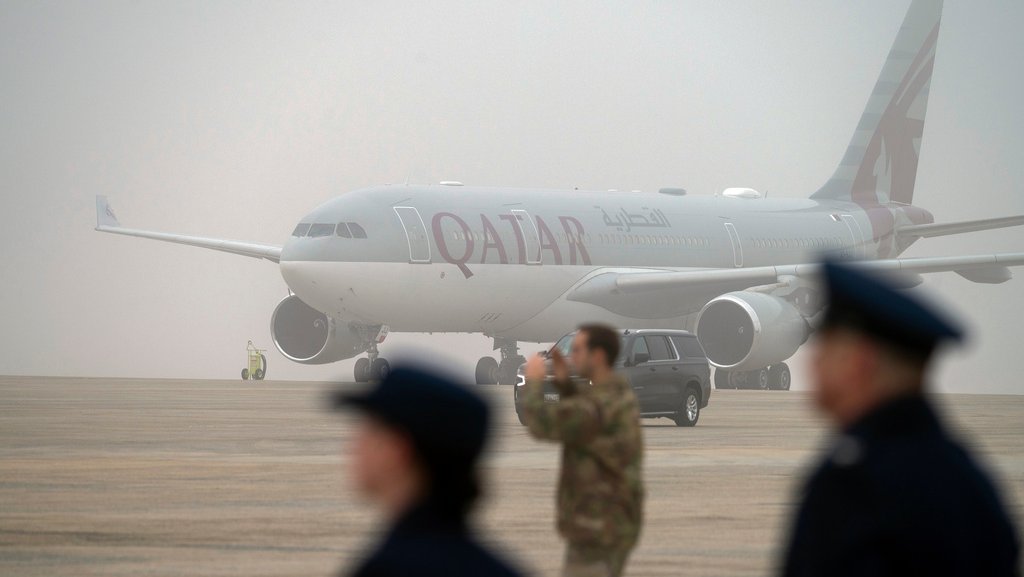
What a difference a few years and a $400 million jet make.
The Trump administration is now putting its weight behind Paramount Skydance’s plans to acquire Warner Bros. Discovery with help from sovereign wealth funds from Gulf States — including Qatar — which reportedly committed this week to investing up to $24 billion.
Trump, now-Secretary of State Rubio, and the other Republicans once alarmed by the supposed threat of Qatari-funded media are silent on potential significant Qatari backing of CNN and HBO (which Warner owns). The proposed investment has been public knowledge since last year.
The hypocrisy underscores why the government shouldn’t decide who owns or finances media, no matter who is in the White House, particularly absent a specific, imminent national security threat. Such authority will invariably be politicized to steer ownership away from any given administration’s critics and toward its allies, with foreign influence as a mere pretext.
As Justice Hugo Black famously said in the Pentagon Papers case, “the word ‘security’ is a broad, vague generality whose contours should not be invoked to abrogate the fundamental law embodied in the First Amendment.”
The administration doesn’t care if Ellison, the Qataris, or anyone else meddles with CNN, as long as they do so in ways the president likes.
The self-serving Republican about-face on foreign investment proves Black right. Paramount Skydance is led by Trump ally David Ellison, who has a proven track record of MAGA-fying news outlets and who has reportedly promised Trump the “sweeping changes” he wants at CNN. Put simply, Trump is confident that the new CNN will serve his interests better than the old one, precisely because he expects ownership to influence coverage.
Ellison has offered assurances that his foreign investors won’t meddle in news decisions, but there’s no indication that the administration intends to do anything to confirm that’s true. And Ellison has little credibility. He has also said he won’t meddle, which is almost certainly nonsense given his track record.
The bottom line is the administration doesn’t care if Ellison, the Qataris, or anyone else meddles, as long as they do so in ways the president likes.
Similarly, it was never about whether foreign powers’ alleged influence through Al Jazeera (or TikTok) harmed America’s interests. It was about whether those outlets furthered the agendas of those in power, for example, by supporting wars they bankrolled. Foreign ownership just offered the government a hook to punish and harass them when they didn’t.
Fearmongering about threats from Al Jazeera arose largely from the outlet’s critical coverage of Israel and, later, that nation’s U.S.-funded war in Gaza. Israel has taken it further, baselessly labeling Al Jazeera reporters terrorists as an excuse to target and kill them.
But as Trump recently said, “When somebody’s nice to me, I love that person. Even if they’re bad people, I couldn’t care less.” Now that a Qatari sovereign wealth fund seeks to invest in media that he believes will be nice to him, Trump could “care less” about supposed security risks. The U.S. government welcomes Qatari media money.
Same goes for TikTok. The worries about Chinese propaganda were really about anti-war sentiments catching on with young people. The panic about surveillance was a red herring.
If China were looking to surveil Americans’ social media activity, it could have bought the data TikTok allegedly enabled it to monitor straight from the data brokers that the same lawmakers refuse to rein in with comprehensive privacy legislation.
The marketplace of ideas isn’t limited to domestic ones.
Tellingly, when Trump became president and stalled the TikTok sale that was supposedly so urgently needed, none of them seemed to mind.
That’s not to say Al Jazeera and TikTok are above criticism — they’re certainly not. Maybe Qatar and China do influence their content. We can’t prove otherwise, any more than we can prove the British government doesn’t meddle with the BBC. But Americans who don’t like Qatar’s influence, if any, can go elsewhere. The marketplace of ideas isn’t limited to domestic ones.
And any Qatari influence likely pales in comparison to the influence Trump’s administration seeks to exert over private media outlets in the U.S., let alone government-funded ones. Has Qatar ever threatened to jail Al Jazeera journalists for not outing their sources, or to criminally investigate them for accurate reporting, let alone both in the same week?
Trump would probably be insulted by the implication that foreign governments can propagandize his constituents — he and his domestic allies like the Ellisons are doing just fine at that on their own, thank you very much.
In any event, Trump, presumably, won’t be president forever. Assuming the Paramount transaction goes through, what’s to stop a Democratic administration that dislikes the new CNN from accusing foreign investors of dictating its content and demanding it register under FARA, or labeling Qatar a foreign adversary and weaponizing the law used to ban TikTok against CNN’s websites and apps?
Never mind whether the coverage they dislike is really dictated by Qatar, as opposed to the Ellisons or whatever hacks they hire to run their news outlet. Foreigners are far easier to scapegoat. Yes, there’s the First Amendment, but the Supreme Court was all too willing to throw it aside when it came to foreign-funded media in the TikTok case. Just mumble something about national security and data privacy, and you’re in the clear, apparently.
For now, any Republicans who are legitimately concerned about risks to national security (as opposed to their own reputational security) from foreign ownership of U.S. media could prove it by opposing Qatari investment in CNN, just like they did with Al Jazeera and TikTok. They’d be wrong, but at least they’d be consistent.
