

Dear Friend of Press Freedom:
This week, Paramount suddenly discovers a “conflict of interest,” New Jersey courts drag their feet on an unconstitutional prior restraint against a local newspaper, and Indiana dresses up execution secrecy as dignity. Plus, a birthday wish for the Espionage Act’s 109th: a complete overhaul.
At Paramount, criticism is a conflict of interest
David Ellison’s Paramount rejected an anti-merger ad from Freedom of the Press Foundation (FPF) last week, citing a conflict of interest.
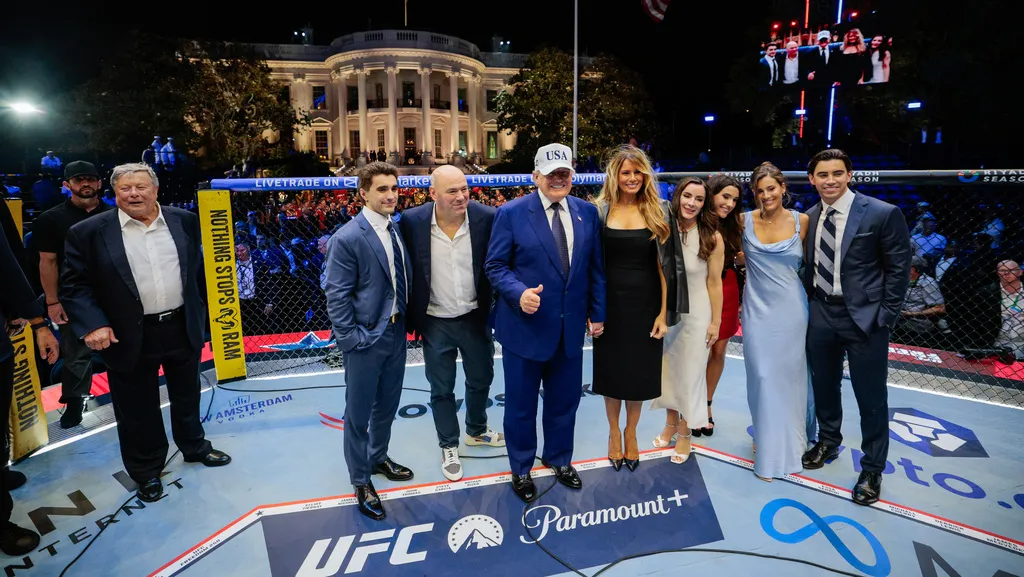
Paramount sure has a strange definition of “conflict of interest.” Its executives see no conflict in agreeing with the Trump administration to hire a right-wing “bias ombudsman” to police CBS’ journalism, promising President Donald Trump “sweeping changes” at CNN if he allows them to buy its parent company, Warner Bros. Discovery, throwing a fancy dinner party honoring Trump while ignoring his attacks on CBS and CNN journalists, or pressuring “60 Minutes” to censor stories to keep the president happy. But they refused to break into their regularly scheduled kissing up to Trump during the UFC Freedom 250 event for a mere 30 seconds of criticism.
Clean up your mess, New Jersey courts
A May order requiring New Brunswick Today to take down and stop reporting on a video showing a school security guard confronting a student was a blatantly unconstitutional prior restraint.
After several rounds of arguments and briefs citing seminal First Amendment precedents, Superior Court Judge Thomas McCloskey, who entered the order, and the New Jersey appellate courts have to know it’s wrong. This isn’t exactly a legal gray area. And yet, the courts keep stalling a hearing on whether to lift the order, allowing the censorship to continue. FPF Senior Advocacy Adviser Caitlin Vogus has more in NJ.com.
Indiana’s secret executions have nothing to do with dignity
Prison officials in Indiana claim their ban on journalists attending executions, which an appellate court recently upheld, is mainly about respecting the dignity of the condemned. Nonsense.
FPF contributor Jeremy Busby explained in The Intercept that the ban is really about obstructing government accountability and public oversight of executions, which are routinely botched even when the media is present.
The Espionage Act has been around for 109 years too long
The archaic Espionage Act has long been weaponized to prosecute whistleblowers and threaten journalists — no matter what they exposed or why.
This week marked the 109th anniversary of the law, and we’re joining our friends at Defending Rights & Dissent in calling on Congress to finally fix it by passing the Daniel Ellsberg Press Freedom and Whistleblower Protection Act. Rainey Reitman, FPF’s board president, explained in a new video.
Attacks on the press at Delaney Hall
Last week, FPF spoke to journalists and advocates about attacks on the press covering demonstrations outside of Delaney Hall, an immigration detention facility in Newark, New Jersey.
Reporters Wali Khan and Amanda Moore, U.S. Press Freedom Tracker Managing Reporter Stephanie Sugars, and FPF Deputy Director of Advocacy Adam Rose described the egregious conduct of federal, state, and local law enforcement, including the use of pepper spray, flash-bang grenades, and batons against members of the press. The Tracker is reporting on or working to verify more than 50 assaults and other aggressions against journalists, many of whom have been deliberately targeted.
What we’re reading
Frustrated by courts, Trump weighed suspending a constitutional right
Leaked memos showing that even White House lawyers were concerned by proposals to suspend habeas corpus are the perfect example of why we’re fighting for the public’s continued access to presidential records.
Justice Department decision to allow Paramount deal surprised staff investigators
This decision sounds pretty crooked. Good thing we have highly respected television news magazines and 24-hour news networks that can help get to the bottom of Trump-Ellison corruption. Oh, right …
Kash Patel keeps suing the press
Politicians shouldn’t be able to use the legal system to bully the press. We need strong anti-SLAPP laws in every state and at the federal level to help put a stop to this nonsense.
Coconut Grove Spotlight sues city of Miami over media policy
These gag policies have repeatedly been held unconstitutional. Government agencies that still have them need to save taxpayers money by repealing them now rather than waiting for their turn to get sued.
NJ high court urges officials not to use personal email for government business
A common sense decision that’s good news for journalists, watchdogs, taxpayers, and everyone who cares about government transparency.
Fearing censorship, student journalists sound alarm over district policy
We should be teaching future journalists to stand up for their independence, not submit to authority. At least these student journalists have learned that lesson.
Are you subscribed to our other newsletters? Sign up for news on excessive government secrecy, and for digital security tips and advice at the link below.
Subscribe Here


