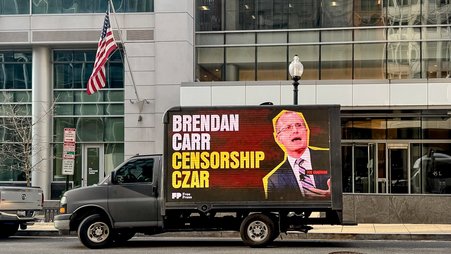
Authoritarians hate being laughed at. Maybe that’s why Federal Communications Commission Chair Brendan Carr continues to pick fights with late-night comedians.
Carr’s latest swipe is a public notice released on Jan. 21, 2026, warning late-night and daytime talk shows that their programs might no longer qualify for an exception to the FCC’s “equal time” rule.
The equal time rule requires broadcast stations that allow one candidate for office to use their airways during non-news programming to provide an equal opportunity for other candidates to do the same. Remember when Carr lost his mind about Kamala Harris appearing on “Saturday Night Live”? That was about the equal time rule.
NBC, to be clear, did not violate the rule. But the freak-out was a preview of how Carr is now preparing to use the rule against those who speak out against President Donald Trump.
Critically, the FCC’s public notice isn’t just a shot across the bow of Jimmy Kimmel, “The View,” and similar shows. It’s also a threat to every broadcast newsroom in the country.
That’s because of how the notice talks about an exception to the equal time rule for “bona fide” newscasts, news interviews, news documentaries, and on-the-spot news coverage. That exception is required by statute, but the law leaves the FCC the discretion as to what counts as a “bona fide.” The First Amendment restricts the FCC’s discretion, but it’s still dangerous. Carr has shown again and again how little he cares for constitutional limits.
In this instance, the public notice goes out of its way to stress that programs that “serve a political agenda” or are “unfairly putting their thumbs on the scale of one political candidate or set of candidates over another” do not qualify for the exception. That sounds reasonable, until you ask an obvious question: Who decides what is designed to serve a political agenda, or what it means to unfairly put a thumb on the scale?
Turns out it’s the not-so-independent FCC that would get to decide. And that’s a big problem.
Carr takes his marching orders from Trump, who believes that any news program that isn’t lavishly praising him is biased against him. The White House literally maintains a website dedicated to denouncing major news outlets, including broadcasters, as enemies and Democratic propagandists for the “crime” of reporting facts. Trump trots out made-up statistics (“97% BAD STORIES”!) to smear news outlets as partisan.
ABC, NBC, CBS — it doesn’t matter. Even capitulation doesn’t buy safety. CBS humiliated itself by paying Trump $16 million to settle a frivolous lawsuit, and ABC didn’t do much better by shelling out $15 million on a case it could have won. Yet Trump still accuses them of bias and even threatens to sue them again all the time.
Stations that want to continue to claim the exception may strive to ensure their coverage meets the approval of Carr and Trump, in a warped recreation of the old and discredited Fairness Doctrine.
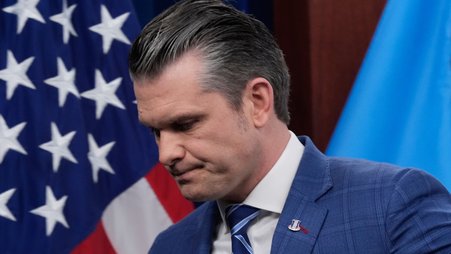
Against this backdrop, it’s not hard to imagine this FCC chair — who wears a gold lapel pin of Trump’s face and has selective amnesia when it comes to the First Amendment — deciding that broadcast news aired on ABC, CBS, or NBC stations are not “bona fide” news programs because, according to the president, they “serve a political agenda.”
That would hand the federal government even more regulatory power to shape broadcast programming. Stations that want to continue to claim the exception may strive to ensure their coverage meets the approval of Carr and Trump, in a warped recreation of the old and discredited Fairness Doctrine.
Stations that don’t modify their coverage and are found not to qualify for the exception as a result could be forced to provide free airtime to candidates they don’t invite to appear on their news programs. Worse, Carr could hold up mergers and other transactions requiring FCC approval for licensees that don’t follow his interpretation of the equal time rule.
Sure, broadcasters could challenge Carr’s edicts under the First Amendment, but that’s a long process that would only further draw government ire in the meantime.
Enforcement of the exception under Carr’s possible new interpretation also would not necessarily be equal. The FCC could aggressively demand “equal time” for Trump-aligned candidates while ignoring violations that shut out Democrats.
Congress knew that without the bona fide news exception to the equal time rule, broadcast news may avoid covering candidates and campaigns, and would be forced to “both sides” discussions where one side is obviously lying. Stripping away that protection will result in a chilling effect that Congress was specifically trying to prevent.
That’s especially true when stations have to worry about the rule being turned against them by a hyperpartisan FCC chair. The result is that the public will be less likely to hear from candidates on broadcast news programs, especially those who may criticize Trump or other Republicans.
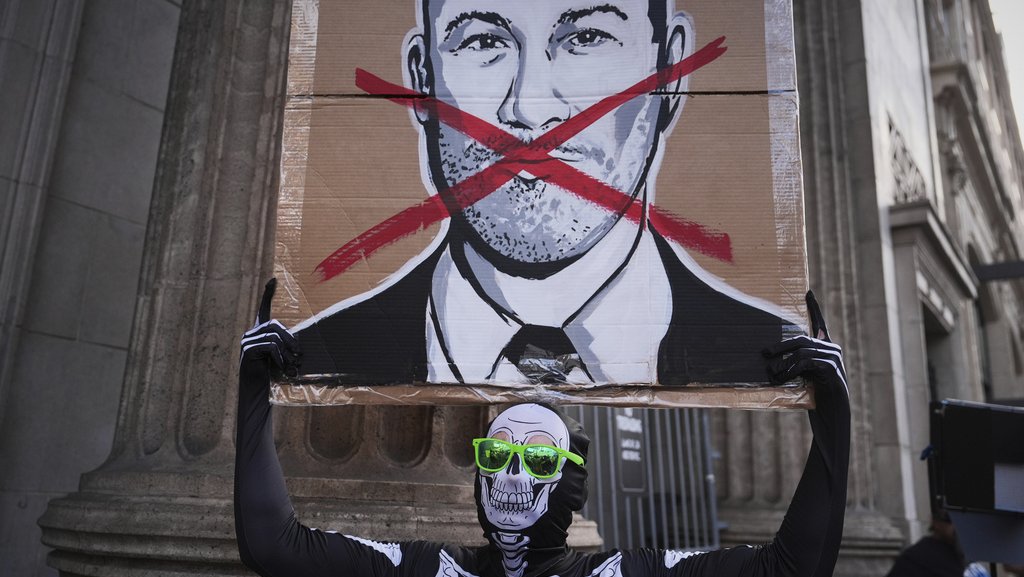
Congress must act to stop this reinterpretation of the equal time rule and bona fide news exemption in its tracks. Oversight hearings are a good start, but lawmakers should also amend the Communications Act to put in guardrails that prevent the FCC from acting as a censor in chief and an arbiter of free speech. Whether it’s late-night TV or the nightly news, free speech shouldn’t be subject to the whims of Brendan Carr and Donald Trump.