Dear Friend of Press Freedom,
Rümeysa Öztürk has now been facing deportation for 311 days for co-writing an op-ed the government didn’t like, and journalist Ya’akub Vijandre remains locked up by Immigration and Customs Enforcement over social media posts about issues he reported on. Read on for more of the week’s press freedom stories.
Arrests of journalists Don Lemon, Georgia Fort send unmistakable message
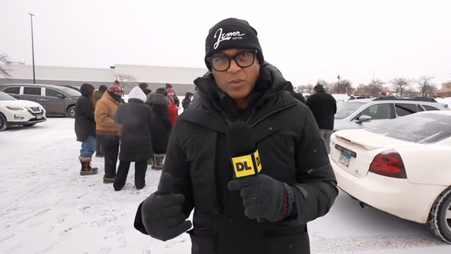
Federal agents arrested journalists Don Lemon and Georgia Fort on charges related to their news coverage of a Jan. 18 protest at a church in St. Paul, Minnesota, in an outrageous attack on freedom of the press.
Freedom of the Press Foundation (FPF) Chief of Advocacy Seth Stern said, “These arrests, under bogus legal theories for obviously constitutionally protected reporting, are clear warning shots aimed at other journalists. The unmistakable message is that journalists must tread cautiously because the government is looking for any way to target them.”
“We’ve recently seen that even in the Trump era, public pressure still can work,” Stern added. “It’s time to do it again. News outlets across the political spectrum need to loudly defend Lemon’s and Fort’s rights.”
Alex Pretti’s murder was an attack on press freedom
The murders of Alex Pretti and Renee Good in Minnesota once again show the power of cellphone footage in combating official lies. Solely because footage was so clear that even the Trump administration knew its story wasn’t credible, the party line shifted within hours of Pretti’s shooting from comments about a “terrorist” planning a “massacre” to something akin to “jaywalking is now a capital offense.”
These days, cellphone videographers are a vital part of the news ecosystem, serving as crucial source material for reporters. FPF’s Stern writes about how shooting, killing, censoring, and other targeting of individuals filming news as it unfolds is an attack on press freedom (and an offense against all else that’s good in the world).
Whistleblower Guan Heng granted asylum
A judge on Wednesday granted asylum to Guan Heng, a whistleblower who secretly filmed Uyghur internment camps in China and shared his footage online after arriving in the United States. His footage became crucial evidence for journalists reporting on the camps, including the team at BuzzFeed News that won a Pulitzer Prize.
We said in a statement that those who spoke out against Guan’s deportation case “should carry that momentum to other fronts in the very active battles for the rights of whistleblowers, journalists, and people who film government wrongdoing, whether in China or Minneapolis.” And we called on the Department of Homeland Security to “give serious thought to why an immigration crackdown supposedly intended to target the worst of the worst is endangering the best of the best.”
Las Vegas judge doubles down on prior restraints
District Judge Jessica Peterson managed a remarkable feat: Violating the same bedrock First Amendment principles twice in just over a week.
First, on Jan. 13, Peterson issued a sweeping “decorum order” unconstitutionally restricting what journalists could publish about a sexual assault trial. She walked that back after a letter from the Las Vegas Review-Journal, but, eight days later, kicked the paper’s journalists out of court for not agreeing to her censorial demands.
The Nevada Supreme Court quickly struck down the second illegal order on Wednesday. Peterson could have saved herself some embarrassment if she’d changed course after reading Stern’s op-ed earlier in the week — or better yet, if she’d read the FIrst Amendment.
Unpaywalled reporting informed Chicago during ICE invasion
FPF founding board member and native Chicagoan John Cusack wrote for the Chicago Sun-Times about how the city benefited during the Operation Midway Blitz immigration enforcement crackdown from unpaywalled reporting by Chicago Public Media (which owns the Chicago Sun-Times), the Chicago Reader, Unraveled Press, The Triibe, Block Club Chicago, and others.
In other places, though, paywalls “create a two-tiered citizenry — one that can afford to be informed and one that cannot. Those most likely to be surveilled, policed, detained and deported are least able to afford subscriptions.”
His op-ed highlighted FPF’s event last October featuring fellow FPF board member Katie Drummond of Wired and Joseph Cox of 404 Media discussing the business benefits those outlets experienced after unpaywalling.
What we're reading
One year into President Trump’s second administration, press freedoms are under attack
FPF Executive Director Trevor Timm explained how attacks on press freedom are growing. Timm’s greatest concern, he added, is that the government may soon cross the Rubicon of “actually prosecuting journalists for doing their job.”
NY Times Magazine writer subpoenaed over article in federal trial
The court should reject prosecutors’ demand that Jeffrey Toobin testify about his reporting. Forcing journalists to testify about their newsgathering chills reporting and undermines the First Amendment.
The best weapon you have in the fight against ICE
Cellphone footage is an incredibly important source of accountability. Government attacks on those who document the news, whether journalists or not, are attacks on the First Amendment.
Illinois law shielding officials’ personal information amid political violence sparks transparency backlash
A new Illinois law that allows public officials to shield their personal information from the public is “basically a sledgehammer” allowing politicians to carry out censorship, FPF Senior Adviser Caitlin Vogus explained.
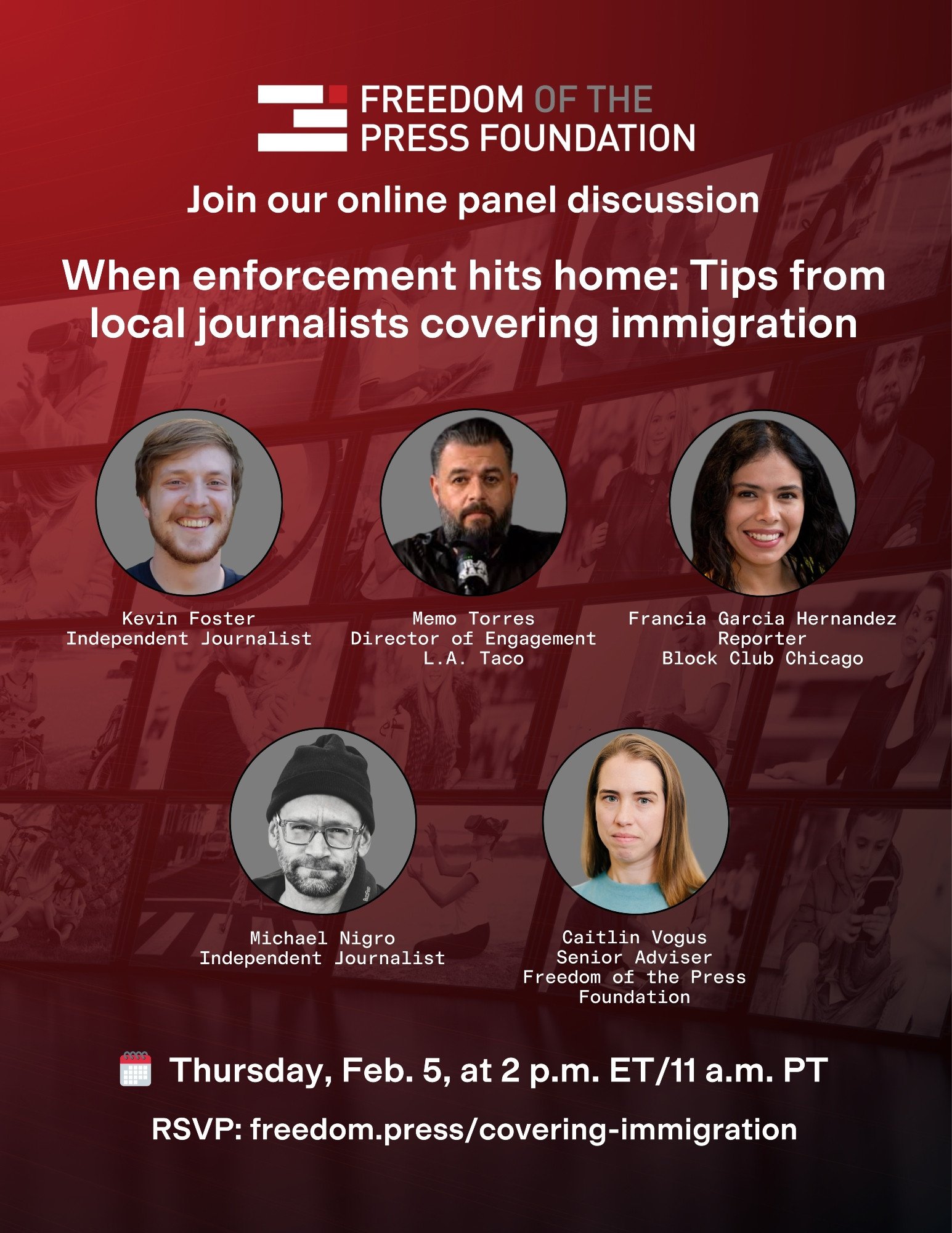
RSVP here: freedom.press/covering-immigration.