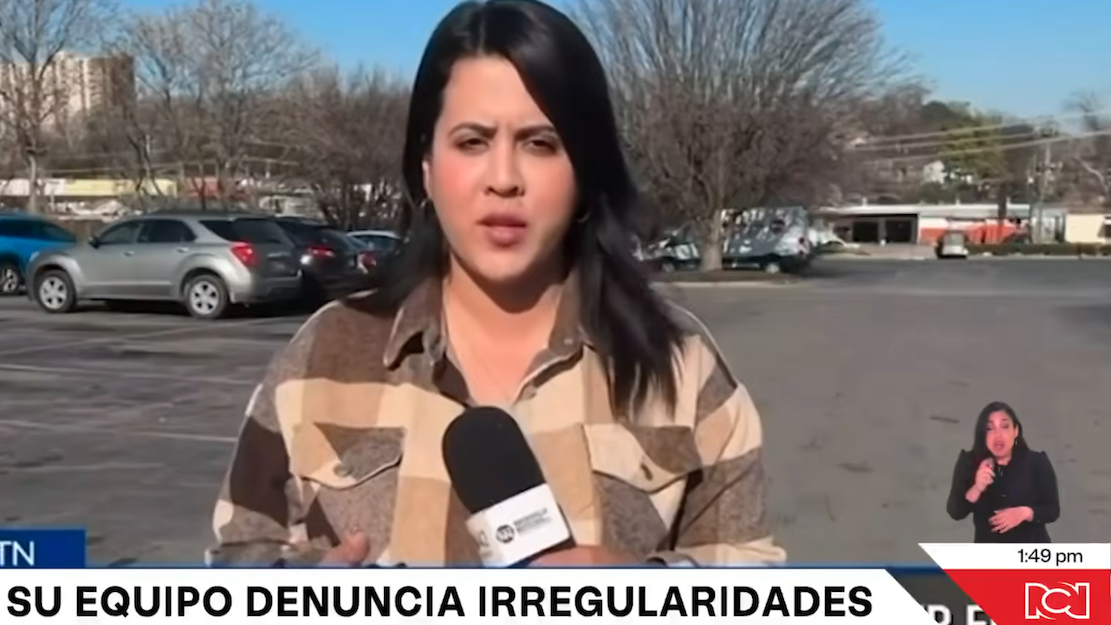
Estefany Rodríguez’s First Amendment case may be just getting started, but it’s already revealing how far the government will go to stifle journalism and speech it finds inconvenient.
The Nashville journalist, originally from Colombia but with authorization to work here, was detained by Immigration and Customs Enforcement on March 4 and released on bond last week. Rodríguez argued her detention was in retaliation for her work as a journalist, in violation of the First Amendment.
In response, the government has taken an extreme position that could have impacts far beyond Rodríguez’s case. In a recent court filing, it suggested that Rodríguez — and anyone the government asserts is an “unlawful alien” — does not have any First Amendment rights at all.
This appears to mark the first time that the Trump administration has argued that a journalist who it claims is living in the United States illegally has no First Amendment rights. Even as it has argued against First Amendment claims made by Mario Guevara and Ya’akub Vijandre, the government did not claim that the First Amendment didn’t apply because of their immigration status.
The government also hasn’t taken that position in cases involving noncitizens who are lawfully present in the United States, like those of Mahmoud Khalil and Rümeysa Öztürk, since Supreme Court and other legal precedent is clear that the First Amendment protects them. Rather, the government argued that immigration law gave it the power to deport Khalil and Öztürk, and that courts don’t have the authority to review First Amendment claims in the context of immigration proceedings.
That’s still wrong, but it’s different from saying that the First Amendment doesn’t protect someone in the U.S. at all because they’re living in the country illegally. If the First Amendment doesn’t apply to a person who is in the country without legal permission, the government wouldn’t just be able to deport them for their speech. It would theoretically be free to jail them for writing a news article or a book or for speaking critically about the government or its policies to the press.
If that sounds obviously wrong, that’s because it is.
Here’s another absurd twist on the government’s argument: The First Amendment also protects free exercise of religion. If those lacking legal status have no First Amendment rights, the government could forbid them from exercising their religion or require them to follow a particular religion.
That can’t be right. The First Amendment, which restricts the government’s power to restrict speech or religious exercise, shouldn’t depend on whether the person speaking or worshiping has legal status or not.
Legal experts agree that, as a general matter, constitutional rights apply to those living illegally in the United States on the basis of their personhood and presence here. The Supreme Court has also explicitly held that certain constitutional rights apply to immigrants in the country without legal permission, including the Fourteenth Amendment’s guarantee of equal protection under the law and the Fifth Amendment’s right to due process.
The government’s argument is inconsistent with that precedent. It would stifle speech from many immigrants who have built lives and developed strong ties to the United States, including those who may believe they have the legal right to be here. Rodríguez, for instance, entered the country legally and had authorization to work here, yet the government claims it can silence her by declaring her an “illegal alien.”
But the government’s interpretation of the First Amendment wouldn’t just harm people like Rodríguez. It’s bad for Americans, too.
Immigrants to the U.S. who the government says lack legal status but who hold valid work permits that allow them to work as journalists, like Rodríguez, can report important news stories about immigration enforcement because they are part of the community being targeted. Book authors here without legal status have written firsthand accounts about the immigrant experience. Sources lacking legal status have told American journalists about deplorable conditions at detention facilities and Kafkaesque immigration proceedings.
All of this speech is invaluable for informing public understanding and debate over immigration policy. Saying that these people have no First Amendment rights means that Americans will be far less likely to hear from them and thus less knowledgeable.
Unfortunately, this isn’t the first time that the government has argued that the First Amendment doesn’t apply to those lacking permanent legal status in the United States.
In 2015, the Department of Justice (under President Obama) argued that a group of mothers in the country without legal permission who protested while in immigration detention couldn’t bring a First Amendment claim because, as “non-resident aliens” who did not have established connections to the U.S., they had no First Amendment rights.
But because the case was later voluntarily dismissed, the government’s theory was never tested in court. The government seemed to have abandoned that argument by not raising it again — until now.
The government’s signal in the Rodríguez case that it’s reviving this argument should alarm everyone. So should its continued efforts to deport Rodríguez, which you can and should speak out against.
The First Amendment was written to limit government power, not let officials decide whose voices are worth hearing. Targeting people because of their legal status and declaring them outside the First Amendment targets every American’s right to know the truth.