Dear Friend of Press Freedom,
I’m Lauren Harper, the first Daniel Ellsberg chair on government secrecy at Freedom of the Press Foundation (FPF), and welcome to The Classifieds. Read on to learn about this week’s top secrecy news.
At least 144 killed in boat strikes — and legal rationale is still secret
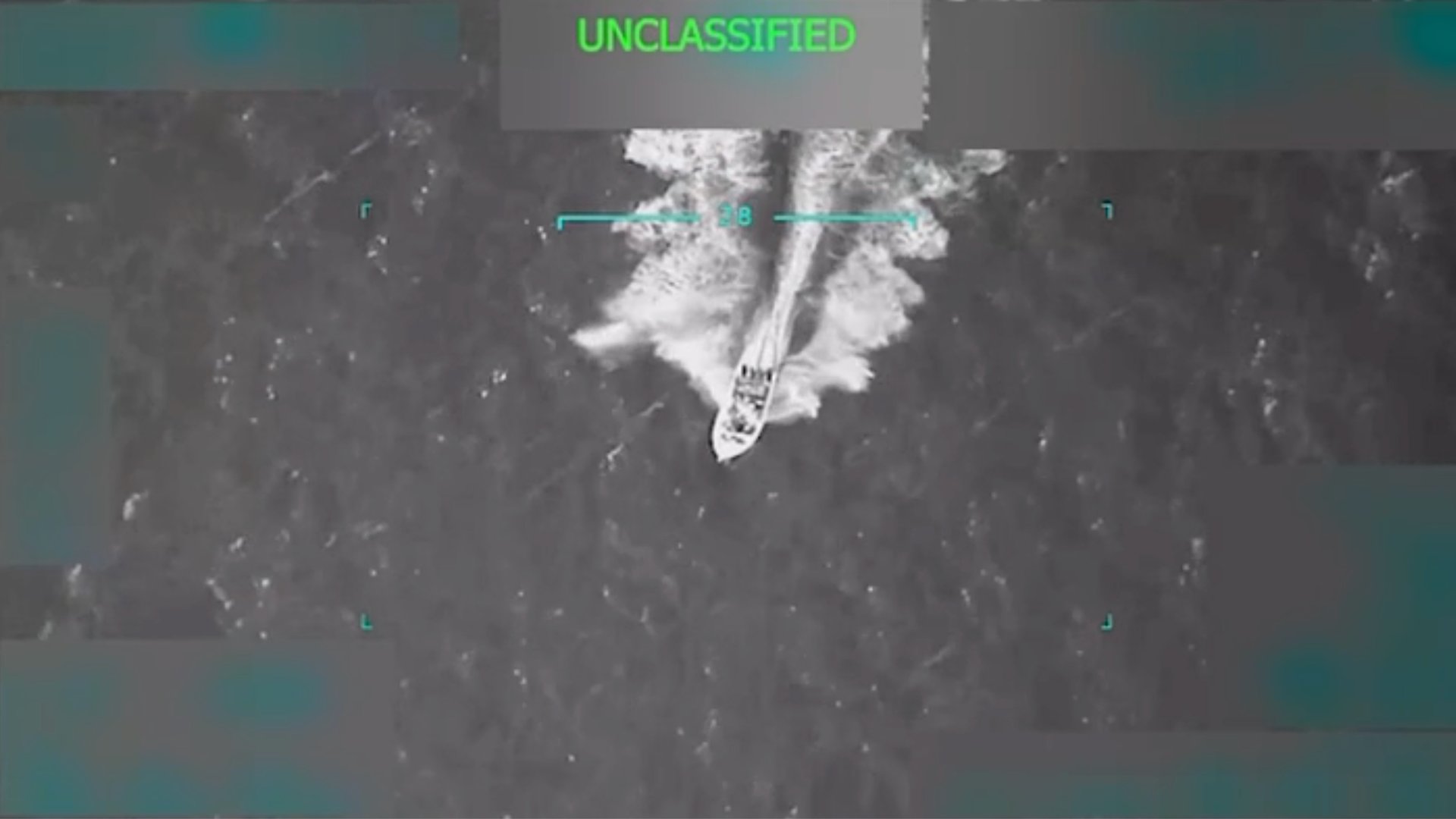
The Defense Department has conducted its 42nd known strike on alleged drug boats, bringing the death total to 144 as of mid-February. Despite the rising death toll, the government’s legal rationale for these likely illegal attacks remains secret. By keeping the legal justifications hidden, the government is sidestepping accountability for what appear to be extrajudicial killings.
The strikes began in September when the administration claimed, without evidence, that the boats were carrying members of the Venezuelan gang, Tren de Aragua, and “massive” quantities of drugs that posed an imminent threat to the United States.
The truth may be worse than the purported threat. The administration has consistently lied about the threat posed by Tren de Aragua and the connection between the gang and the Venezuelan government, resulting in a manufactured crisis used to justify ousting Venezuelan President Nicolás Maduro and taking control of Venezuelan oil sales.
Diplomacy for sale
U.S. embassies across Asia are racing to see who can raise the most money for America’s 250th anniversary celebrations, with ambassadors aggressively soliciting unprecedented sums from the private sector and raising concerns that the only way to access the Trump administration is with a large check. In Japan alone, the U.S. embassy has reportedly raised $35 million from local businesses. While reports state the money is being raised for Fourth of July activities, it’s not actually clear what the money will be spent on, who is donating, or if anything is being promised in return for the cash.
This is the latest example of the Trump administration encouraging large corporate donations for government-linked projects with no meaningful transparency or oversight. Other ongoing pay-to-play scenarios include the hundreds of millions of dollars being raised for the Trump presidential center in Miami, the White House Ballroom, and the renovation/destruction of Washington’s Kennedy Center.
All told, the estimated total donations to these projects exceeds a billion dollars.
Join FPF on Feb. 24 for Freedom of Information Act event
On Tuesday, Feb. 24, FPF is hosting a webinar with journalists and transparency advocates to learn how these experts use both local and federal public records requests to pry loose information the government would rather keep secret. We’ll talk with Mukta Joshi, an investigative journalist for Mississippi Today and a fellow at The New York Times, and Matt Scott, the executive director at the Atlanta Community Press Collective, to learn how they use requests in their reporting, and find out what tips they have for other requesters. Click on the flyer below to register:

What I'm reading
Government loses hard drives it was supposed to put ICE detention center footage on
Immigration and Customs Enforcement appears to be pulling out all the stops to avoid sharing video footage of a notorious detention facility near Chicago. ICE reports it has lost three of the hard drives that were provided by plaintiffs to the agency in a lawsuit alleging abusive living conditions at its Broadview facility. ICE previously tried to argue in the same case that access to the footage was “irrelevant because prisoner living conditions have improved.” (Keep in mind, this is the same agency that is refusing to say whether or not it is regularly detaining pregnant women or nursing mothers, or how often it is separating mothers from their children.)
Members of Congress demand DOJ stop tracking lawmakers’ Epstein files searches
The Department of Justice is spying on members of Congress who review the unredacted Epstein files, disclosing that is keeping “a log of the dates and times” of members’ visits and search queries (FPF has filed a FOIA request for the log). The revelation came during Attorney General Pam Bondi’s recent hearing concerning her agency’s compliance with the Epstein Files Transparency Act, to which Bondi brought a “burn book” containing examples of several lawmakers’ searches. This isn’t the first time the executive branch has spied on Congress, but it may be the first time an attorney general has flaunted this fact at a congressional hearing.
Four Maryland watchdogs warn OAG’s guidance on public records law could weaken oversight
Maryland’s Office of the Attorney General has issued troubling new guidance that would limit the ability of state investigators to access records revealing local waste, fraud, and abuse. The guidance instructs agencies to treat state inspectors general “like any other member of the public when requesting records,” even though state law grants IGs expansive access to agency records. The state’s guidance ignores this, and effectively gives agencies the OK to ignore investigators. It should be revoked.
Transparently yours,
Lauren Harper
Daniel Ellsberg Chair on Government Secrecy
Freedom of the Press Foundation