Dear Friend of Press Freedom,
I’m Lauren Harper, the first Daniel Ellsberg chair on government secrecy at Freedom of the Press Foundation (FPF), and welcome to The Classifieds. Read on to learn about this week’s top secrecy news.
Pentagon watchdog behaving like a lapdog
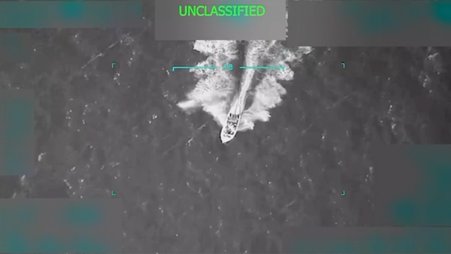
The Defense Department is currently engaged in several legally dubious operations that may violate international and domestic law. A nonexhaustive list of the Pentagon’s questionable actions include deploying federal troops to participate in law enforcement activities, waging war against Iran without any imminent threat, and targeting alleged drug boats.
The stakes for oversight of the military have rarely been higher. But the Pentagon’s inspector general, Platte Moring — who is charged with investigating waste, fraud, and abuse — is indicating he has no interest in holding the department accountable. Instead, reports allege Moring is seeking advice from department officials about potential political ramifications before continuing a high-profile investigation into the boat strikes.
There’s still time for Moring, who has no previous experience as an inspector general, to do the right thing and decide to continue with the investigation.
If he doesn’t, it puts even more pressure on members of Congress to reveal what they know about the strikes, including the government’s legal rationale for conducting them.
Trump nominates new archivist
Speaking of senior officials serving in positions for which they’re not qualified, the Trump administration has nominated Bradford Pentony Wilson to serve as archivist of the United States. The law requires the archivist to be appointed solely on the basis of their qualifications, but there’s no public indication Wilson has any experience in either archives or records preservation. What he does have, as records expert Anthony Clark notes, are ultraconservative political affiliations and a history of expressing his disdain for multiculturalism.
This begs the obvious question of whether Wilson, if confirmed, would be willing to stand up to President Donald Trump if he discovered that the president was (again) destroying presidential records or refusing to return them to the government at the end of his term. It also raises concerns that his preservation priorities may be biased, and that he may promote an exclusory historical narrative.
The truth is out there classified
Trump recently accused former President Barack Obama of revealing classified information when Obama said that aliens were real on a podcast. While Obama didn’t reveal classified information by expressing this opinion, he did prompt Trump to direct agencies to identify their records on UFOs and unidentified anomalous phenomena, and review them for declassification.
Don’t get too excited. A bipartisan law passed by Congress in 2023 already requires agencies to do just that, and send those records to the National Archives for public release. Unfortunately, the law gives agencies a lot of discretion to keep their UAP files classified, and that’s probably why you haven’t heard much about it.
If we actually want to see the UAP records, a social media post from Trump isn’t enough. We need these three things:
- An empowered National Archives. Right now, the archives stores older records from across the government, including the CIA and Defense Department, but it isn’t allowed to declassify other agency records in its possession. If the National Archives had this power, it would speed up declassification for all kinds of historical records, not just those about UAPs.
- An independent review board. We need a “UAP Review Board” similar to the one created to review the JFK assassination records. This board should have the power to overrule agency classification decisions.
- An executive order. If Trump really wants agencies to take UAP declassification seriously, he needs to issue an executive order. Otherwise, agencies will keep dragging their feet.
If we don’t embrace these meaningful solutions, the truth will remain classified.
What I'm reading
The government just made it harder to see what spy tech it buys
The government has stopped supporting a website, the Federal Procurement Data System, that has long served as the central repository for all unclassified federal contracts. The site, FPDS.gov, has helped journalists break stories about immigration agencies’ acquisition of surveillance technology, among other scoops. The FPDS.gov data is supposed to be transferred to another site, SAM.gov, which has traditionally been used to post contract opportunities. Worryingly, SAM.gov has a much less reliable search function.
Some of the best news stories start with a public records request
Under Michigan’s public records laws, nearly everything is fair game for records requests submitted to the state’s public universities, “even the amount of money dining halls spend on ranch dressing.” Student journalists at Michigan State University’s independent student newspaper, The State News, recognized the value in records requests to their school, and created a FOIA generator to make it easier to request school records.
Transparently yours,
Lauren Harper
Daniel Ellsberg Chair on Government Secrecy
Freedom of the Press Foundation