Dear Friend of Press Freedom,
I’m Lauren Harper, the first Daniel Ellsberg chair on government secrecy at Freedom of the Press Foundation (FPF), and welcome to The Classifieds. Read on to learn about this week’s top secrecy news.
Marco Rubio out at National Archives
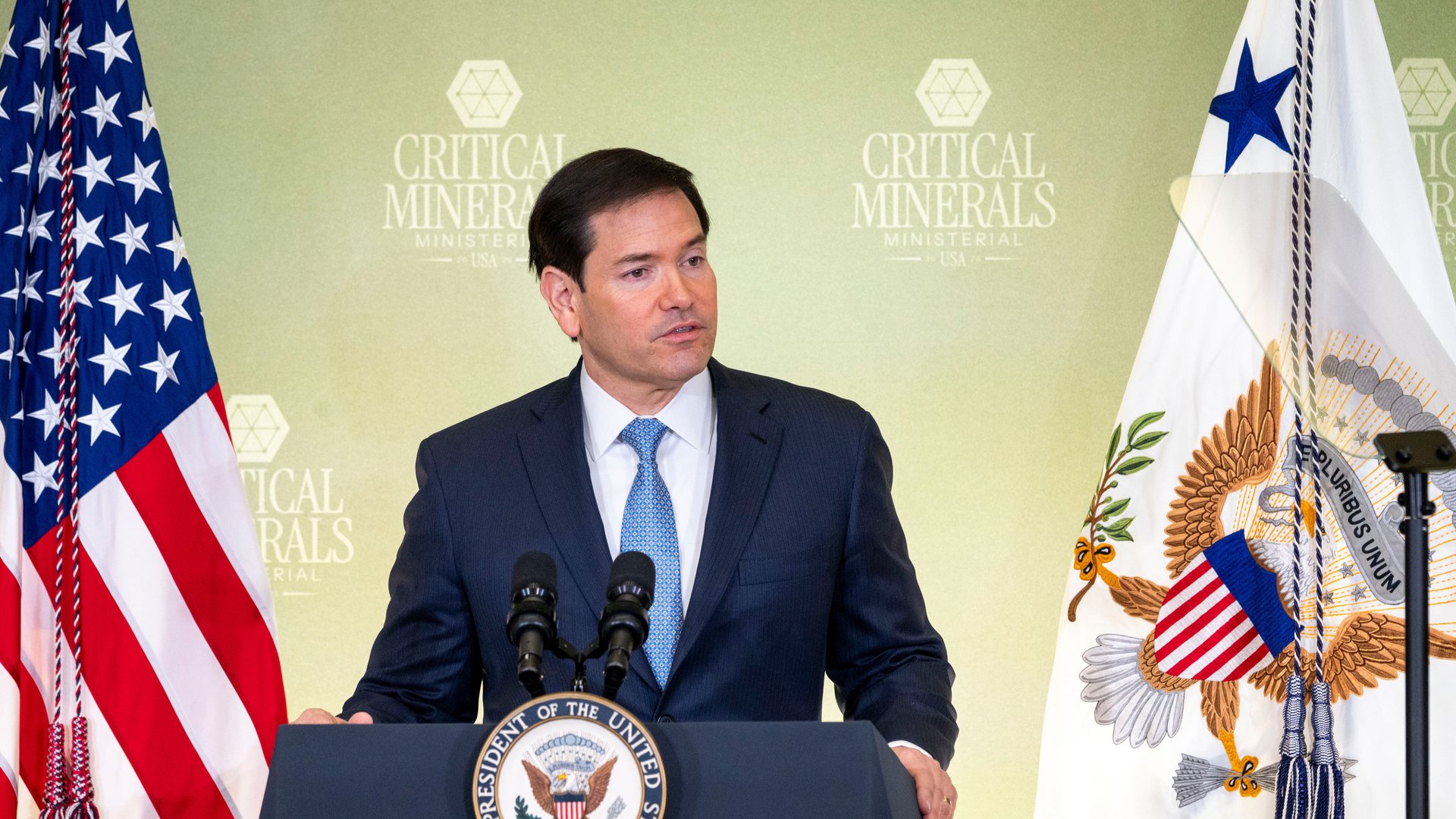
Secretary of State Marco Rubio was never qualified to serve as acting archivist of the United States, and in a normal political climate, I’d be cheering the end of his year-long stint at the National Archives and Records Administration. But these are not normal times, and there is a real concern that his successor might not be any better.
Rubio has reportedly picked Jim Byron, who has been functioning as the agency’s day-to-day head, to take over from him. Byron’s track record is troubling, to say the least. He has overseen deep budget cuts and workforce reductions while presiding over a series of botched declassification efforts. These failures range from the exposure of Social Security numbers in the JFK assassination records declassification, to the release of Mikie Sherrill’s unredacted military files during her high-stakes gubernatorial campaign in New Jersey.
The Trump ‘library’ grift continues
The Donald J. Trump Presidential Library Foundation, which may or may not ever build a library, just selected a company overseen by Donald Trump Jr. to run its digital fundraising platform. The company, PSQ Impact, will charge a 3.5% processing fee for payments made through the Trump library foundation. That could net Trump Jr. a huge sum.
The Trump library foundation told the IRS it expects to raise at least $1 billion for the structure. Believe it or not, that is a modest amount compared to former President Barack Obama’s foundation, which raised over $1.1 billion as of 2023 for its center, but had the ultimate goal of raising $1.6 billion. If the Trump library foundation reaches anywhere close to Obama’s, Trump Jr.’s company stands to rake in around $40 million.
Gabbard’s chokehold on intelligence whistleblowers
Last May, a classified whistleblower complaint alleged misconduct by Director of National Intelligence Tulsi Gabbard and another unnamed federal agency.
Under normal circumstances, the whistleblower would be allowed to share their complaint with Congress.
But that’s not what happened.
Instead, after the complaint was filed, Gabbard placed a mole in the intelligence community’s inspector general’s office to report directly to her. The office kept the complaint locked in a vault for eight months, until a series of front-page articles forced the IG to share the complaint with Congress.
The secrecy prevented Congress from making a prompt determination at a time when Gabbard’s appointees have proved themselves willing to distort the truth, and highlights the precarious position of intelligence community whistleblowers.
The debacle also underscores the hypocrisy of Gabbard, who introduced the Protect Brave Whistleblowers Act while serving as a representative in Congress.
Read more, including speculation about what the complaint may concern, on our website.
Afghanistan reconstruction oversight website now in ‘CyberCemetery’
The archived Special Inspector General for Afghanistan Reconstruction website is now available. We recently reported that the website was not accessible on “CyberCemetery,” which is hosted by the University of North Texas and is where you can find SIGAR’s sister site, the Special Inspector General for Iraq Reconstruction. However, unlike the Iraq reconstruction site, you can’t find the SIGAR site through the search function, you can only find it by using this direct link.
What I'm reading
Tennessee to test Stephen Miller’s plan of enlisting states for immigration enforcement
A new Tennessee bill would criminalize “disclosure of information about immigration enforcement activities to the public.” This absurd, antidemocratic law comes on the heels of a change to the state public records law that exempts records from the chief immigration enforcement officer from release.
Bill to punish those who hide public records would put teeth in Florida Sunshine Law
Florida is taking the opposite approach from Tennessee and introducing strong transparency legislation. House Bill 437, and the companion Senate bill, SB 770, allow for “punishment, including misdemeanor charges, for officials who don’t follow the rules.” The House bill passed with broad, bipartisan support, and pressure should be applied to the state Senate to do the same.
Big donors had access to Mikie Sherrill at inaugural ball. But the public won’t have access to the donor list
Who was asked to donate over $250,000 at a dinner celebrating the inauguration of New Jersey Gov. Mikie Sherrill? You’ll never know. Even though Sherrill ran on transparency and accountability, a 501(c)(4) linked to her inaugural committee is taking advantage of state law that doesn’t require these types of organizations to disclose their fundraising.
Transparently yours,
Lauren Harper
Daniel Ellsberg Chair on Government Secrecy
Freedom of the Press Foundation