Dear Friend of Press Freedom,
I’m Lauren Harper, the first Daniel Ellsberg chair on government secrecy at Freedom of the Press Foundation (FPF), and welcome to The Classifieds. Read on to learn about this week’s top secrecy news.
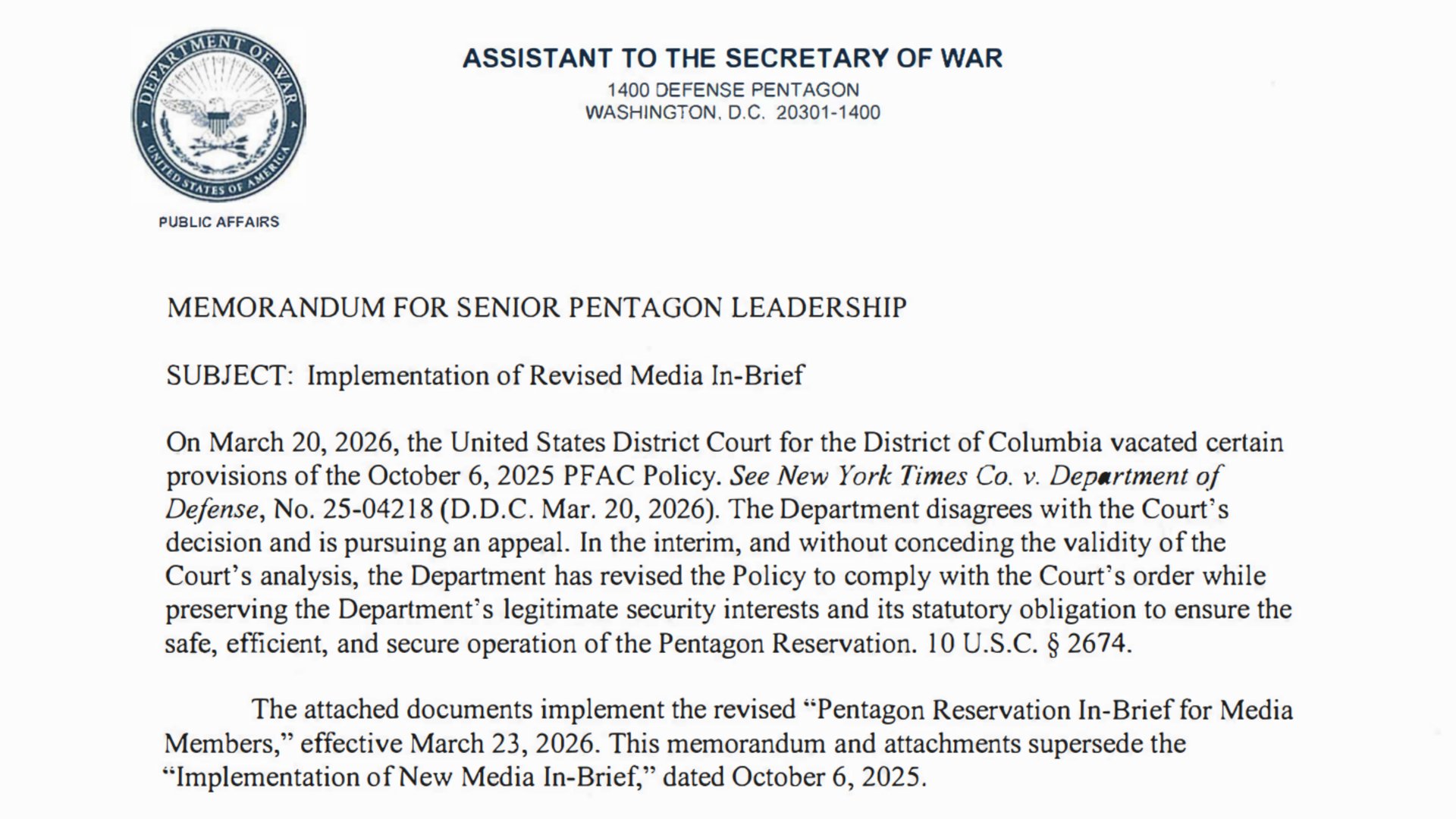
The Pentagon’s 12-year stall: Journalists, just file a FOIA
You know that a government agency’s media policy is a sham when it tells journalists to “just file a Freedom of Information Act request.”
That’s the latest directive coming out of Defense Secretary Pete Hegseth’s Pentagon, and it is a bad-faith measure masquerading as transparency. That’s because FOIA, which is broken across the government, is especially bad at the Pentagon.
How bad is it? According to recent data, the department’s oldest pending FOIA request is nearly 4,400 days old. In other words, Hegseth is telling journalists if they file a request today, the Pentagon might get back to them in 12 years. For those counting, that would be the year 2038.
That’s unworkable and insulting in national security reporting, especially in an environment where the military is waging two likely illegal military operations at the same time, with no sign of stopping.
FOIA is a vital tool, and it’s often the best tool to force the government to disclose the secrets it most wants to keep. But it is a slow, litigious, and exhausting process. Even when it works as intended, it was never meant to be the only or primary way for the press to interact with the military. It is supposed to offer a bare minimum level of transparency to the press and public — not to put a ceiling on journalists’ access to the government.
Judge rules ICE can’t use shutdown as excuse for secrecy
In response to a FOIA lawsuit filed by FPF, a federal judge has ruled that Immigration and Customs Enforcement can’t ignore the information request because of a lapse in funding. Judge Amit Mehta told the agency that the records we’re fighting for, which concern congressional oversight of ICE detention centers, are of heightened public interest, and the agency can’t rely on the shutdown to avoid transparency.
That’s great news for everyone who wants to hold ICE accountable. Shutdowns aren’t an excuse for secrecy, and thanks to our litigators Kevin Bell and Ginger Quintero-McCall, ICE knows it.
DOJ blames FOIA requesters for its animosity toward transparency
Never one to miss an opportunity to get it wrong, the Department of Justice celebrated Sunshine Week by blaming FOIA requesters for the agency’s long-standing reputation of pathetic FOIA enforcement.
Blaming the public for asking how their government works is a bad move. The DOJ’s take ignores the real problem: We have the most secretive government in a generation, and FOIA is the best tool we have to fix it.
Even before the debates around “vexatious requesters” — as some agencies would surely label me and other advocates and reporters — FOIA offices across the government were struggling. The problem is equal parts lack of funding, lack of political leadership that prioritizes FOIA within agencies, and the willingness of the Justice Department to represent agencies’ terrible FOIA positions in court, no matter how wrong on the law their stances are.
If the Justice Department really wanted the government to receive fewer FOIA requests, it would 1) make agencies comply with the act’s proactive posting requirements, and 2) post agency responses and documents in the national portal, FOIA.gov.
Watch an expert panel on the Trump administration’s escalating attacks on free speech
I had the honor of moderating a panel with First Amendment experts Nora Benavidez, Jameel Jaffer, and Ben Wizner this week. The event, which was co-hosted by FPF and the Ellsberg Initiative for Peace and Democracy at the University of Massachusetts Amherst, can be viewed here.
What I'm reading
‘Significant’ staff cuts drive rising FOIA backlogs
The DOJ should bookmark this article and reread it before it starts blaming FOIA requesters for its poor enforcement of the law.
Trump appeared to have business motive for keeping classified documents, Jack Smith finds
One obvious reason President Donald Trump stole classified documents is that he views government property as his personal property. Financial gain could be a motive — it is Trump after all — but he fundamentally does not respect the Presidential Records Act.
The USS Liberty FOIA lawsuit and the fight over a secret 1967 report
Do 60-year-old records deserve to still be classified? Probably not, and a recent lawsuit aims to prove it.
Transparently yours,
Lauren Harper
Daniel Ellsberg Chair on Government Secrecy
Freedom of the Press Foundation