Dear Friend of Press Freedom,
I’m Lauren Harper, the first Daniel Ellsberg chair on government secrecy at Freedom of the Press Foundation (FPF), and welcome to The Classifieds. Read on to learn about this week’s top secrecy news.
Trump makes it easier for CIA to spy on Americans
President Donald Trump, who has repeatedly accused the CIA of conducting “witch hunts,” is now making it easier for the agency to spy on Americans. The administration is doing so by granting spies access to domestic law enforcement files, including a database of 770 million records encompassing activities of law-abiding U.S. citizens, all without any clear legal basis.
The administration says the data-sharing will focus on combating international gangs bringing drugs into the United States. We should be skeptical of this claim right off the bat, because the administration has already been caught lying about the relationships between gangs and foreign governments as a pretext for illegally deporting people.
A real concern is that the administration could take its lies a step further and say there is a connection between a foreign government and U.S. citizens it deems hostile (whether because they support antifa or vote in Fulton County, Georgia), as a loophole to allow the CIA to spy on them.
It’s hard not to wonder if this is what Sen. Ron Wyden was alluding to in his cryptic February letter about concerns with CIA activities. If not, it should be added to Wyden’s list.
Judge helps Trump administration bury Jack Smith report
It’s no secret Trump illegally took government records, including classified documents, to Mar-a-Lago at the end of his first term. But a recent ruling by Judge Aileen Cannon, in which she permanently barred the Justice Department from releasing the report compiled by special counsel Jack Smith, keeps the public in the dark about the report’s findings.
Luckily, watchdogs American Oversight and the Knight First Amendment Institute are continuing to fight for the report’s release — and reminding agencies that they can’t destroy the document in the meantime.
Watch FPF’s FOIA event
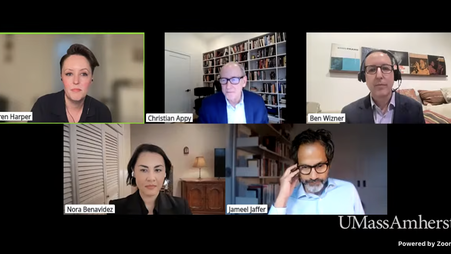
FPF recently hosted a webinar to learn how journalists and advocates use both local and federal public records requests to pry loose records the government would rather keep secret. If you missed our conversation with Mukta Joshi, an investigative journalist for Mississippi Today and a fellow at The New York Times, and Matt Scott, the executive director at the Atlanta Community Press Collective, watch the recording here.
What I'm reading
Trump’s properties remain an epicenter of his conflicts and corruption in second term
This comprehensive report examines the myriad ways Trump is enriching himself during his second term. It includes the number of visits Trump has made to his own properties (198), how much these visits cost taxpayers ($2 million), how many times special interest groups have held events there (57), and the number of times federal agencies have promoted Trump’s properties (19). The investigation underscores why it’s a mistake that the Secret Service doesn’t track visitors to Trump properties the way it tracks visitors to the White House. The public deserves to know who is courting Trump for the price of a golf membership.
High-priority 9/11 records: A closer look
The Public Interest Declassification Board, an advisory body that reports to the president on declassification issues, followed its recent public meeting pushing for the full declassification of 9/11 records with a blog highlighting two sets of records that should be prioritized above all others. These are the President’s Daily Brief summaries and the 9/11 Commission interview transcripts taken during the transition between the Bill Clinton and George W. Bush administrations. One of the biggest hurdles for declassification of these and other historical records is that the National Archives and Records Administration does not have the authority to declassify other agency records (and we don’t have either an archivist or acting archivist as of this writing). Read more about how to improve 9/11 records declassification here.
Justice Department withheld and removed some Epstein files related to Trump
The Justice Department is hiding documents that include allegations that Trump abused a minor, according to an in-depth investigation by NPR’s Stephen Fowler. The alleged cover-up raises an issue Congress has proved unwilling or incapable of answering: How can the legislature force an executive branch agency to disclose records it is lawfully required to release? This is a systemic problem, but it’s often treated as a one-off for high-interest records. One way to address this would be to impose meaningful (monetary) penalties when agencies fail to release info.
Transparently yours,
Lauren Harper
Daniel Ellsberg Chair on Government Secrecy
Freedom of the Press Foundation