The Digital Security Digest, by Freedom of the Press Foundation (FPF), is a weekly newsletter with security tips that keep you, your sources, and your devices safe. If someone shared this newsletter with you, please subscribe here.
The FBI tried to break into a reporter’s phone. Lockdown Mode stopped them
As 404 Media reports, court documents detailing the FBI’s raid on the home of Washington Post reporter Hannah Natanson reveal that government investigators were unable to pull data from her iPhone. It appears that they were blocked by Apple’s Lockdown Mode.
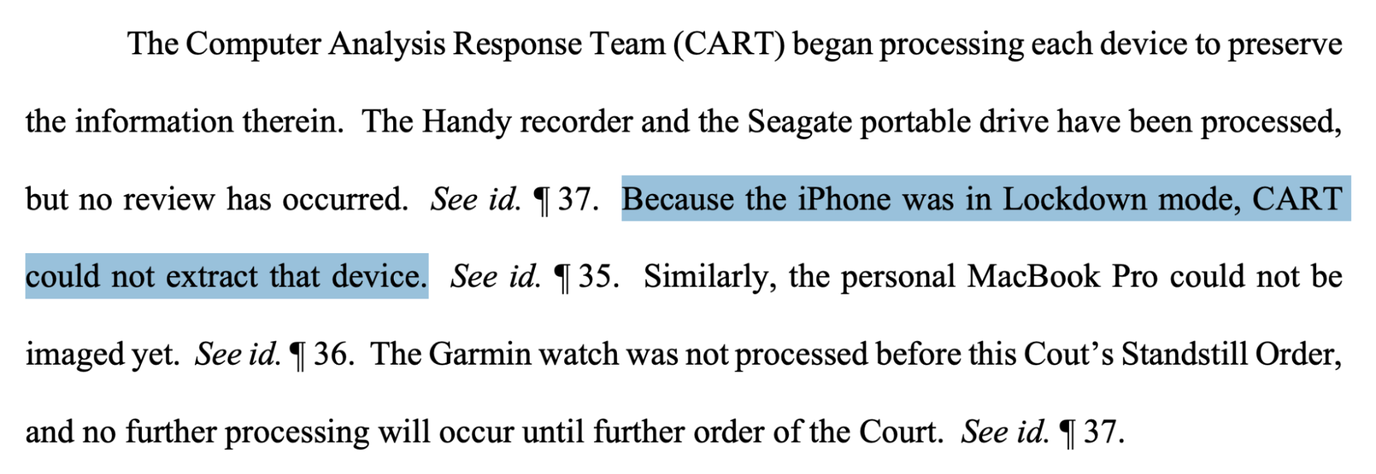
Lockdown Mode is an optional security setting in iPhones, iPads, and MacBooks that enhances device security by disabling features such as certain web technologies in browsers, and some features like link previews within the Messages app. Lockdown Mode also disables some accessories and physical connections while your device is locked — in this case, forensic tools that are typically connected through USB.
While Apple positions Lockdown Mode as a defense against mercenary spyware designed to take control of a phone or computer remotely, this incident also shows that the feature may also be a defense against someone who has physical control of that device.
What you can do
- iPhone users: Try out Lockdown Mode in your settings. Note that this may affect how you use your phone, for example by occasionally blocking messages from unfamiliar phone numbers. It largely otherwise acts the same as your standard iPhone experience. Kick the wheels and see how it works for you. You can always disable it later.
- Android users: Up-to-date Android devices now have a similar feature called Advanced Protection. Check that out.
- There are even more useful details to learn from the court documents. We read them so you don’t have to. Read our analysis, “Five security lessons from the FBI’s Washington Post raid.”
Updates from our team
- J-school professors: Do you want to learn more about teaching digital security? We’re putting together a project intended to help journalism school instructors integrate digital security education into their curricula. We’re at the early stages of shaping this project, so if you would like to be involved when we are ready for launch, please reply to this email to let us know, and we’ll add you to our list for future outreach.
Our team is always ready to assist journalists with digital security concerns. Reach out here, and stay safe and secure out there.
Best,
Martin
–
Martin Shelton
Deputy Director of Digital Security
Freedom of the Press Foundation