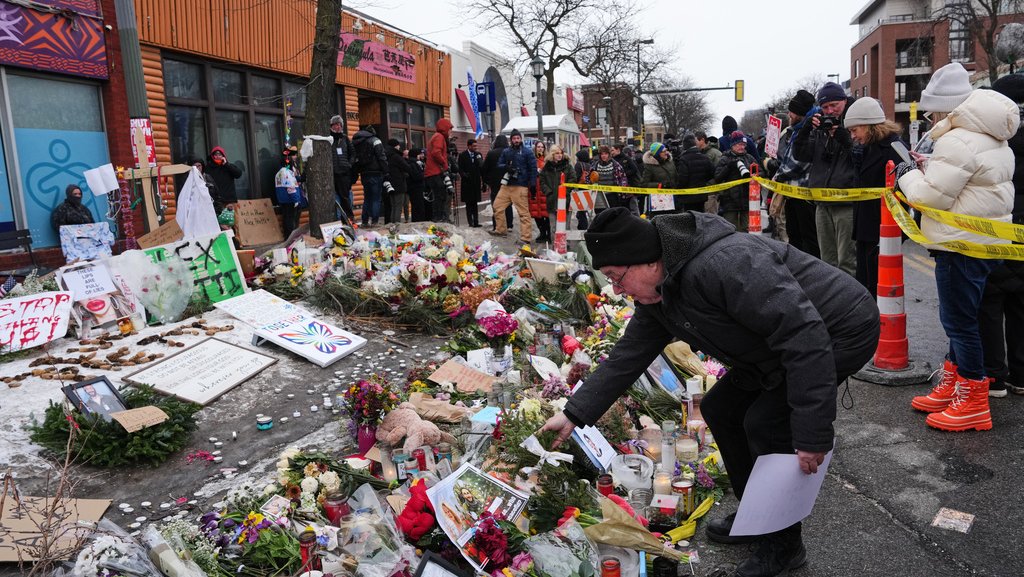
The murders of Alex Pretti and Renee Good in Minnesota once again show the power of cellphone footage in combating official lies. Solely because footage was so clear that even the Trump administration knew its story wasn’t credible, the party line shifted within hours of Pretti’s shooting from comments about a “terrorist” planning a “massacre” to something akin to “jaywalking is now a capital offense.”
These days, cellphone videographers are also a vital part of the news ecosystem, serving as crucial source material for reporters who can’t be everywhere at once. That means shooting, killing, censoring, and other targeting of individuals documenting news as it unfolds is an attack on press freedom (and an offense against all else that’s good in the world).
It doesn’t matter if they’re journalists. Recording police or Immigration and Customs Enforcement agents is an act of journalism, no matter who does it. If those recording are not journalists themselves, their relationship with the press is symbiotic. They’re journalists’ sources — even whistleblowers.
Decades ago, the way to blow the whistle on government misconduct was to leak documents like the Pentagon Papers. Those methods are still vital, of course. That’s why the administration is trying so hard to stop them. But footage is just as powerful, maybe more so.
And the courage of those recording in the street rivals that of people like Pentagon Papers whistleblower Daniel Ellsberg and National Security Agency surveillance whistleblower Ed Snowden, both longtime board members of Freedom of the Press Foundation (FPF). The latter group risked life behind bars, but the former risk being assaulted or shot dead by federal agents.
Cellphone footage also poses a more ubiquitous threat to the powerful than leaked documents. Only government contractors and employees have the ability to leak documents — virtually everyone has a cellphone. And that’s exactly why the government is cracking down on cellphone videographers with the same tactics it has long used against old-school whistleblowers.
The government is cracking down on cellphone videographers with the same tactics it has long used against old-school whistleblowers.
Whenever someone leaks government secrets to the press, no matter who is in the White House, the same pattern almost invariably plays out. Important-sounding people in suits and military uniforms pop up on the Sunday shows and op-ed pages warning about the dire threat to national security posed by the disclosures, which never materializes. Government spokespeople and their stenographers in the media nitpick at the leakers’ personal lives, question their motives, and call them traitors. What they actually revealed about government corruption and incompetence gets buried beneath the fearmongering and name-calling.
Similarly, the government now characterizes cellphone recording as obstructive or even violent. Officials claim agents are being “doxxed” when someone records their face or reveals their name, and complain about wildly exaggerated or entirely fabricated dangers they’re facing. ICE-watchers are accused of being part of some amorphous domestic terror conspiracy — their names might even be populating a government domestic terror watch list, according to some agents.
Their phones are often unlawfully seized or damaged before they can post their footage on social media, where journalists might find and report on it. A lawsuit seeking to force the federal government to preserve evidence from Pretti’s killing claims that federal agents “apparently seized cell phones and detained witnesses,” tactics that can both intimidate those who film and prevent their footage from seeing the light of day, just like newsroom raids intimidate and censor journalists and sources.
This didn’t start with Trump 2.0, of course, and, for whatever reason, the Twin Cities have been at the center of the story for years. Darnella Frazier didn’t have a press credential around her neck when she recorded Derek Chauvin kneeling on George Floyd’s neck. When Philando Castile was shot during a traffic stop in 2016, Diamond Reynolds’ livestreamed footage captured a killing that would otherwise have been framed as justified.
Thousands of miles away, cellphone footage was crucial in exposing Israel’s crimes in Gaza. Palestinians, many with no prior journalistic training, took unfathomable risks to ensure that Israeli officials could not get away with the same kinds of lies and pretexts that U.S. officials now spew after killings of civilians (just replace “Hamas” with “the worst of the worst”).
One of this year’s Oscar nominees for best documentary is “The Alabama Solution,” which highlights reforms prompted by incarcerated people — including Robert Earl Council, Melvin Ray, and Raoul Poole — using contraband cellphones to document abuses. They risked and endured severe retaliation (they heard about the Oscar nomination from solitary confinement) to expose the truth because the press doesn’t cover prisons like it should. That’s both due to news companies not seeing any money in it and the government drastically restricting access.
As corporate and government pressures against accountability journalism continue to mount, the outside world might be similarly dependent on its Councils, Rays, and Pooles to expose the truth. Horrors like Pretti’s murder are tragic losses not only to the victims’ families and communities but to what’s left of the free press in the United States.
Correction: This post has been revised to reflect that Edward Snowden was not a founding board member of FPF.