Dear Friend of Press Freedom,
We don’t yet know whether the government will appeal the dismissal of its deportation case against Rümeysa Öztürk for co-writing an op-ed it didn’t like. Regardless, others — like Ya’akub Vijandre — remain locked up by Immigration and Customs Enforcement for exercising their press freedom rights. Read on for more on the week in press freedom.
Leakers helped exonerate Rümeysa Öztürk
Tufts student Rümeysa Öztürk’s deportation case was finally thrown out this month, although the government can still seek review of the dismissal. The ruling came after a memo leaked to the press revealed that the administration knew before arresting her that its allegations of terrorism and antisemitism were false. Öztürk’s supporters were right all along — the case was based entirely on her co-authorship of a relatively tame pro-Palestinian op-ed.
Freedom of the Press Foundation (FPF) Chief of Advocacy Seth Stern wrote for The Intercept about how the case is yet another example of leaks — which the government claims pose a dire risk to national security — instead serving the public good and exposing misconduct. When the government lies to the people and ignores the Freedom of Information Act, it’s inevitable that people of conscience will bring important documents like the Öztürk memo to the press.
How free news helped Chicago get through Operation Midway Blitz
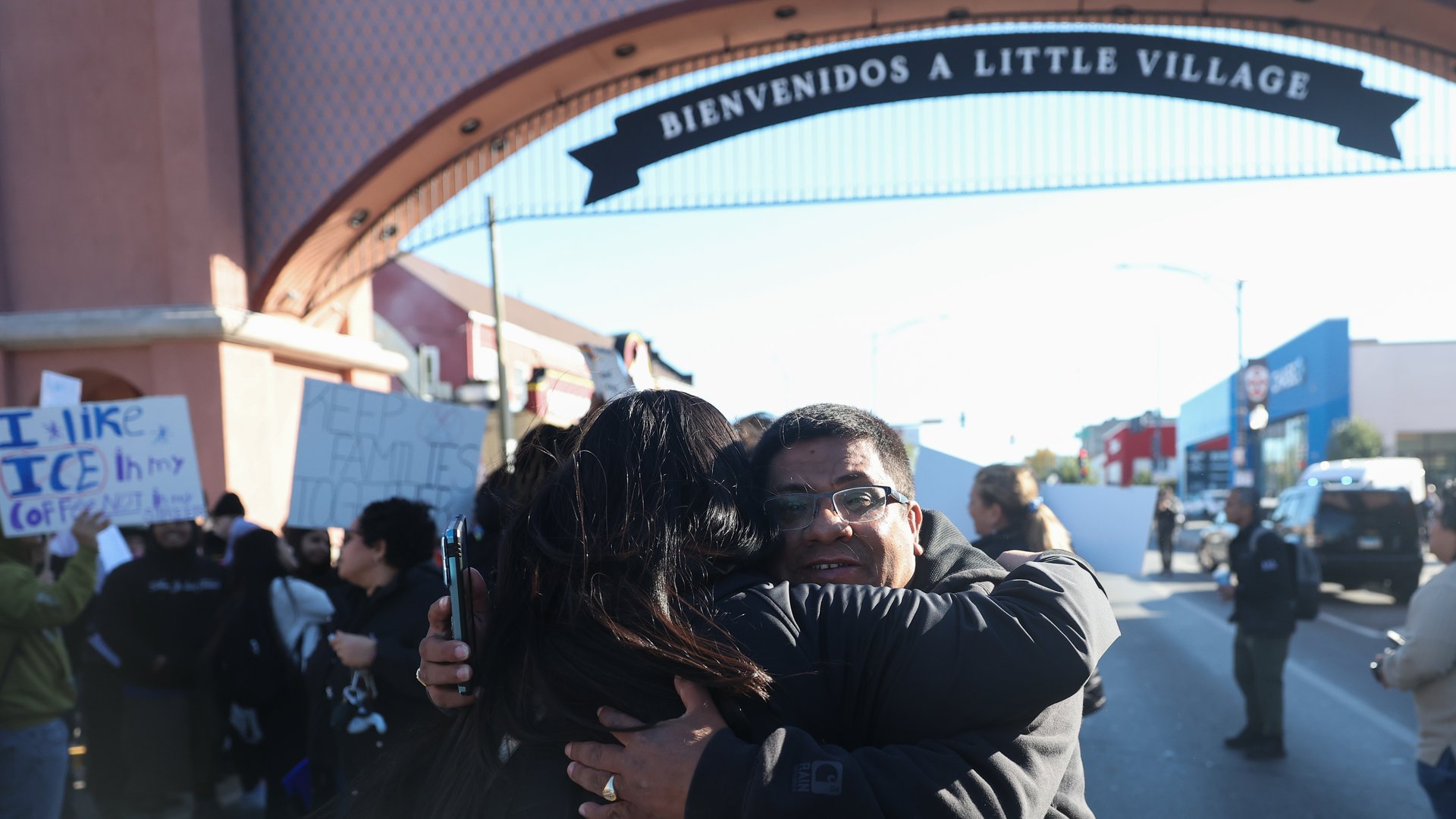
When immigration authorities invaded Chicago last year, they often targeted lower-income neighborhoods, meaning the people who most needed news about their activities were unlikely to be able to afford a newspaper subscription.
Fortunately, Chicago is full of news outlets that don’t paywall their excellent reporting (as are Los Angeles and Minneapolis, Minnesota, which experienced similar assaults in recent months). But the next city might not be so lucky. Stern and FPF founding board member, actor, and activist John Cusack joined “In the Loop with Sasha-Ann Simons” on Chicago’s NPR affiliate, WBEZ, to discuss that and other press freedom issues.
Uber for authoritarians
Speaking of leakers bringing us important news, a manual for ICE’s immigrant-targeting computer system, Palantir ELITE, was leaked on Jan. 30 via 404 Media.
John Skiles Skinner, an engineering manager at FPF, took a break from improving SecureDrop (more on that later) to evaluate the manual and the dark road it shows we’re on. He writes that “the software allows the administration to order up a goon squad wherever they want, at the touch of a button. Like Uber for authoritarians. Let’s call it repression as a service.”
Five security lessons from the FBI’s Washington Post raid
The January FBI raid of the home of Washington Post federal government reporter Hannah Natanson, in connection with a leak probe involving a government contractor, was a dangerous escalation against press freedom and likely runs afoul of the Privacy Protection Act. It shouldn’t have happened at all, but it might preview what’s to come.
FPF Deputy Director of Digital Security Dr. Martin Shelton recently examined a court document that shines light on some specifics of the case, and wrote about five lessons journalists can learn.
SecureDrop keeps getting better
FPF is proud to announce the latest version of SecureDrop — open source software whistleblowers use to communicate anonymously with journalists.
The release lays the groundwork for the upcoming SecureDrop App and other exciting efforts to make SecureDrop faster, cheaper, and more secure for newsrooms worldwide. Stay tuned.
What we're reading
‘We returned from hell’: Palestinian journalists recount torture in Israeli prisons
Fifty-eight Palestinian journalists “reported being subjected to what they described as torture, abuse, or other forms of violence” in Israeli detention facilities since October 2023.
Prison-style free speech censorship is coming for the rest of us
Incarcerated journalist and FPF columnist Jeremy Busby wrote about how the upcoming trial of a Texas activist for possessing anarchist zines reminds him of the censorship and retaliation that has been prevalent inside prisons for decades.
Photojournalists documenting Trump’s deportation forces play critical role, but face increasing state violence
A veteran civil rights attorney warns that “frontline journalists should read the specifics of any emergency order and ask: How do I protect myself, and how do I push back against laws that I feel are unjust, immoral, unconscionable, or that get in the way of freedom of the press?”
Homeland security wants social media sites to expose anti-ICE accounts
It should be obvious that criticizing ICE — or any government agency — on social media is protected by the First Amendment. Tech companies must not comply with sweeping government demands that seek to unmask users simply for expressing their opinions online.
Officials investigating how Lookout obtained report on Oregon State Hospital
“The hunting of whistleblowers is wrong because it is failing to address the actual problem, which is the reason they blow the whistle in the first place,” FPF Deputy Director of Advocacy Adam Rose said.
Wisconsin Assembly passes anti-SLAPP legislation
Good news: The Wisconsin Assembly advanced its bill protecting people from strategic lawsuits against public participation to the Senate. Legislatures in red, blue, and purple states understand there’s nothing partisan about protecting journalists, activists, and everyone else from anti-speech lawfare.
Upcoming events
Join us at the events below; click the flyers for more info, including on how to register.
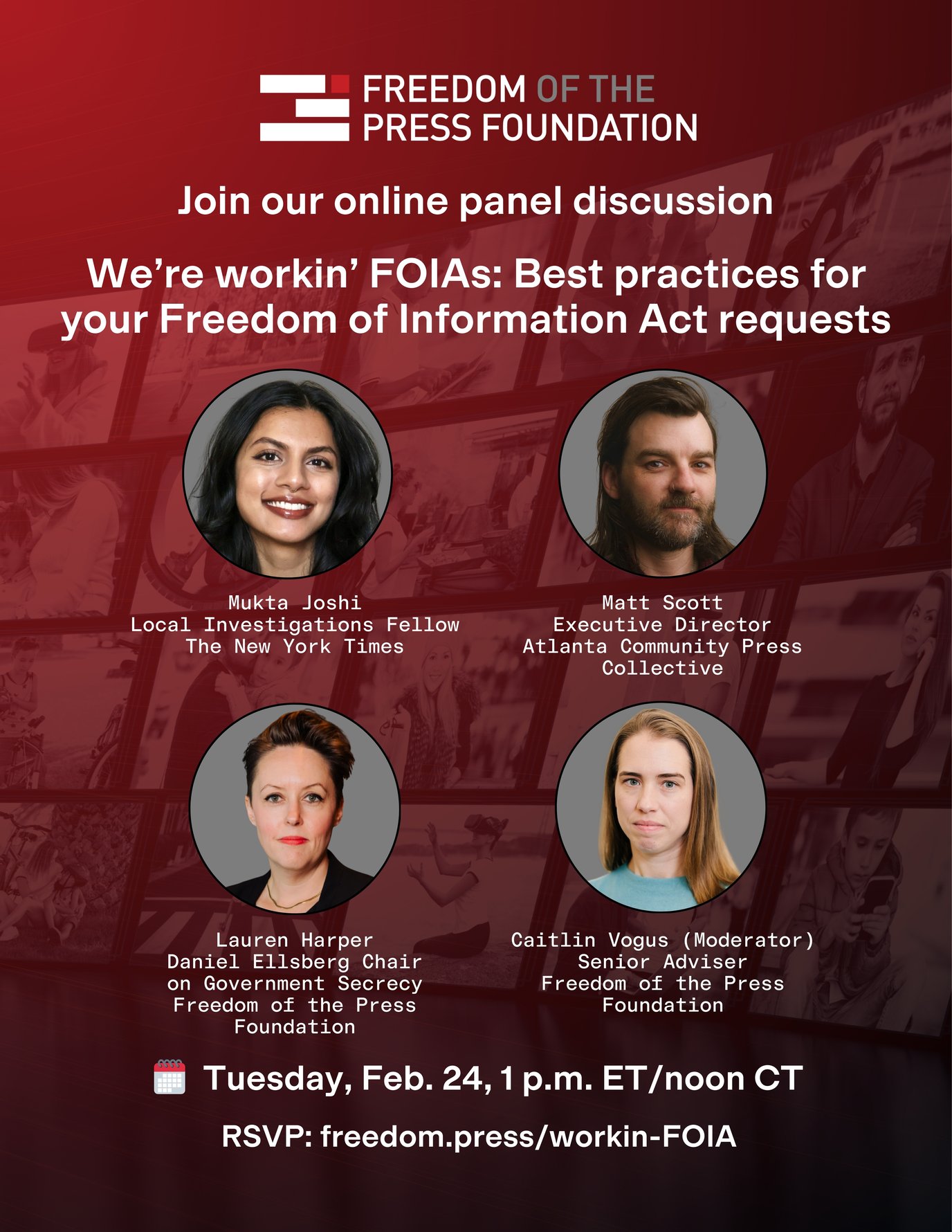
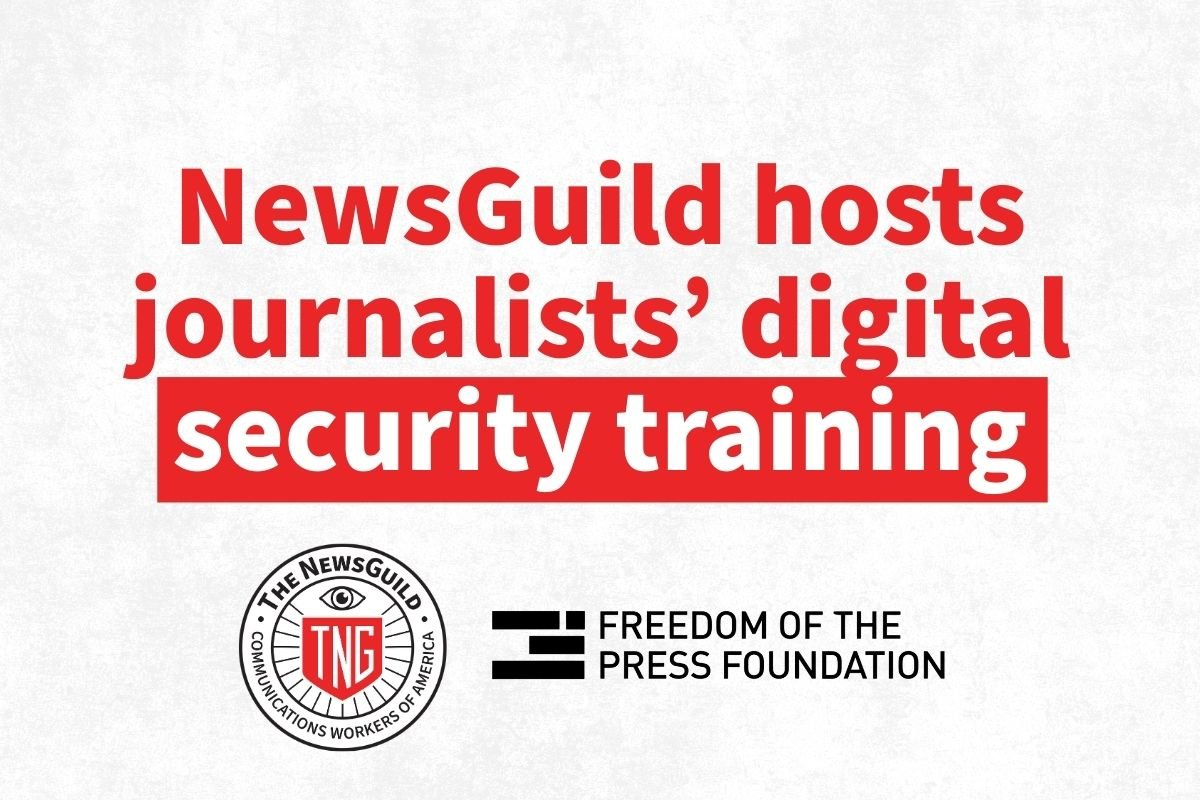
Join us for a timely digital security training on how to protect your devices, sources and reporting material from adversaries, particularly in the face of physical interception, sponsored by the NewsGuild-CWA.