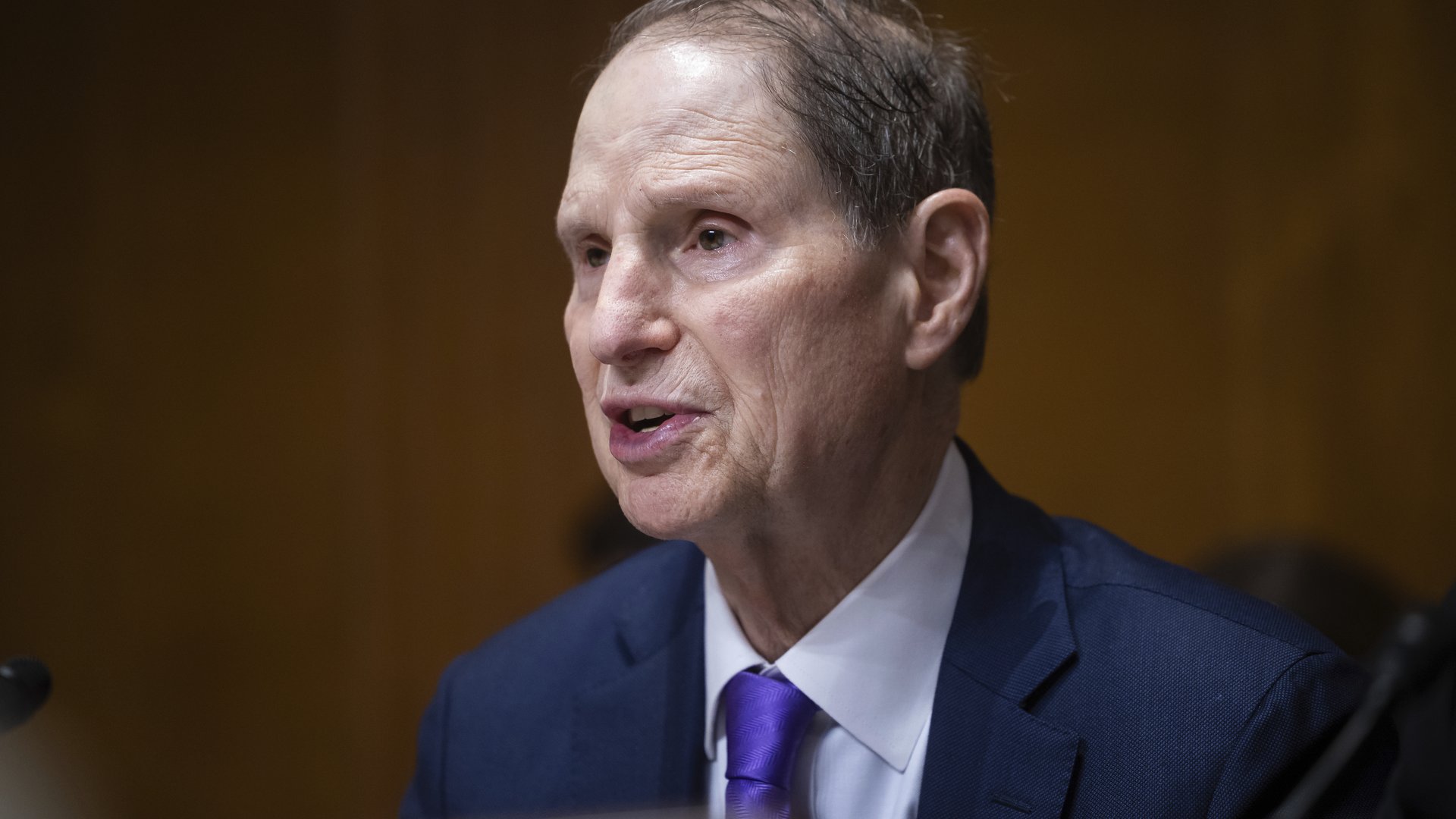
A new bill introduced by Sen. Ron Wyden and Rep. Becca Balint could help end a troubling pattern of law enforcement officers getting permission from judges to search and seize a journalist’s materials without telling courts about a federal law designed to prevent exactly that.
The Privacy Protection Updates Act would provide some much-needed teeth to the Privacy Protection Act of 1980, a federal law that forbids the government from using search warrants in most cases to raid newsrooms or journalists’ homes, or seize their equipment. Freedom of the Press Foundation (FPF) strongly endorses the bill.
Just a few months ago, the government raided Washington Post reporter Hannah Natanson’s home based on a search warrant that failed to mention the Privacy Protection Act. Although a judge later rebuked assistant U.S. attorney Gordon Kromberg for that omission, prosecutors and the government have faced few real consequences so far.
Natanson’s case is at least the sixth in recent years where authorities seeking a search warrant against a member of the press failed to inform the court about the act. In some past instances, they didn’t even tell the court that the target was a journalist.
A look back at these cases shows that unless Congress strengthens the Privacy Protection Act by passing Wyden and Balint’s new bill, the law will continue to fail the very journalists it is meant to protect.
Marion County Record
In 2023, police in Marion County, Kansas, raided the Marion County Record newsroom and the home of co-owners Eric and Joan Meyers. Officers did not alert the judge who signed off on the warrant to the Privacy Protection Act. Joan Meyers, who was 98, died the day after the raid on her house.
After the national backlash to the raid, Marion Police Chief Gideon Cody claimed he knew about the act but argued that it doesn’t apply when journalists “are suspects in the offense that is the subject of the search.”
But because Cody never made that argument to the judge, a court never had the chance to evaluate it. If it had, it would have rejected it. The act’s “suspect exception” does not permit searches when the “offense” police are investigating consists of the “receipt, possession, communication, or withholding” of the material sought, which was precisely the case with the Record.
Prosecutors eventually withdrew the warrant, and the county later paid $3 million to settle lawsuits brought as a result of the search — but only after the damage was done.
Bryan Carmody
In 2019, San Francisco police searched journalist Bryan Carmody’s home, office, and phone records while trying to identify his confidential source. They did not tell the judges who authorized the search warrants about the Privacy Protection Act, or that Carmody was a journalist with a press pass issued by the police department.
As a result, Carmody awoke one morning to police using a sledgehammer to try to break down his door, before he was detained for hours and questioned by the FBI while the search was carried out.
All of the search warrants against Carmody were later ruled illegal, and the city paid him a $369,000 settlement and agreed to ensure its employees were aware of internal policies concerning warrants to journalists.
Indybay
Just five years later, however, the San Francisco Police Department again failed to disclose the Privacy Protection Act in a search warrant targeting the independent news outlet Indybay. It also didn’t mention California’s shield law, which also protects journalists from certain compelled disclosures.
Police obtained the search warrant to compel Indybay to turn over electronic information in an effort to identify the author of a post on its community-sourced newswire who claimed to have vandalized the San Francisco Police Credit Union, and it gagged Indybay from talking about it. With help from the Electronic Frontier Foundation, Indybay successfully fought off the demand.
Tim Burke
The FBI raided the home office of journalist Tim Burke in 2023 as part of a criminal investigation into alleged computer crimes, after news outlets posted outtakes from a Fox News interview showing recording artist Ye, formerly Kanye West, making antisemitic comments. Burke has since been charged with federal crimes for accessing the outtakes, which he shared with news outlets. Burke denies the charges.
The government obtained a search warrant for the raid, but in its warrant application described Burke as a media consultant, not a journalist. It also never informed the court that the Privacy Protection Act arguably applied to the search, or of any exceptions to the law on which the government relied.
Burke objected to the search for its failure to disclose his status as a reporter and omission of the PPA, as well as on other grounds, and asked for evidence seized from the raid to be suppressed. A federal court rejected his motion, however, noting that even if the act applied, the remedy for violations of the law did not include suppression of evidence.
Pablo Unzueta, Julianna Lacoste, and Hugo Padilla
In 2020, the Los Angeles Sheriff’s Department obtained search warrants for the devices of two journalists, Pablo Unzueta and Julianna Lacoste, and one livestreamer, Hugo Padilla. The three were arrested while covering a protest, and all three were identifiable as members of the press by markings on their clothing or their press credentials.
When seeking the search warrants, police did not tell the court that the three were journalists or engaged in dissemination of information to the public, according to records unsealed after a court battle led by the First Amendment Coalition. Police also did not mention the Privacy Protection Act or the California shield law.
A later lawsuit by Unzueta resulted in a $90,000 settlement.
The Wyden-Balint measure can help fix the law
The government’s repeated failure to tell courts the full story when seeking search warrants against journalists or others engaged in the dissemination of information to the public shows just how necessary the Privacy Protection Act Updates Act is.
The new bill would help fix these problems by requiring the government to explicitly disclose and prove the exceptions to the law it wants to rely on to justify a search warrant to courts. Courts must also ensure that those exceptions are applied consistently with the First Amendment. These are extremely important changes that should prohibit a repeat of the Natanson case.
The bill would also provide that any evidence obtained in violation of the Privacy Protection Act cannot be used in any investigation, court proceeding, or other official proceedings. This exclusionary rule is a stronger deterrent than the act’s current remedy, which allows only for monetary damages when the law is violated.
Finally, the bill would ensure that the government can’t sidestep its protections when it targets information stored in the cloud by journalists and others who disseminate information to the public.
With these fixes, Congress can ensure that the Privacy Protection Act effectively prohibits search warrants targeting journalists, a protection that is needed now more than ever. Judges can’t enforce a law they don’t know applies, and a free press can’t function if reporters fear surprise raids on their newsrooms and homes.