Dear Friend of Press Freedom,
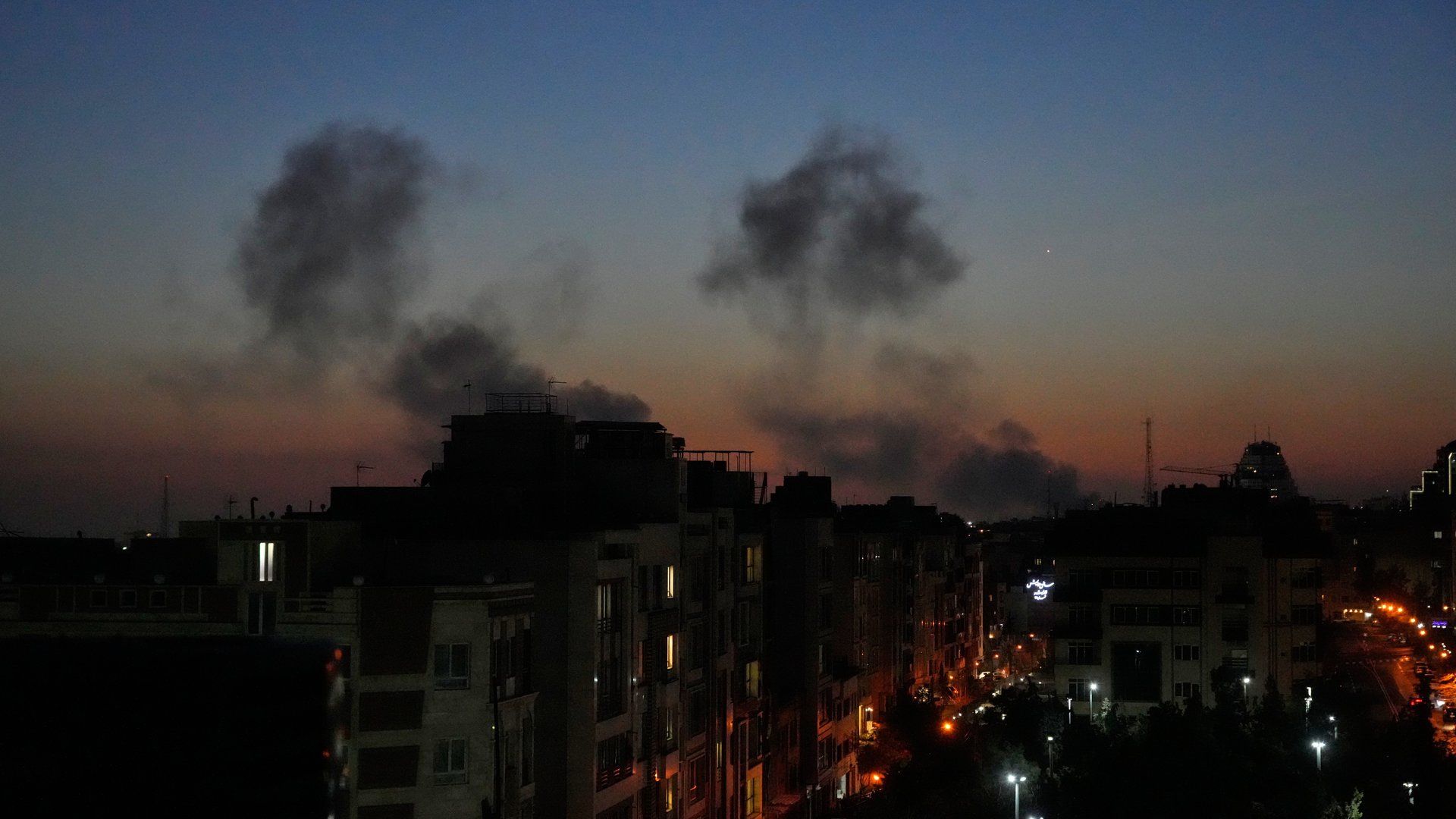
The U.S.-Israeli war in Iran, all parties to which have abysmal recent records on press freedom, is sure to bring an escalation in censorship and retaliation against journalists. That makes it a perfect time (as it has been for over a century) to reform the Espionage Act, one of the primary weapons the government uses to stifle whistleblowing and war reporting. Read on for more.
The public deserves to know when Iran war reporting is stifled
Journalists covering the U.S. and Israel’s new war on Iran should be telling their audiences not only what they know but what they were prevented from finding out, and by whom.
That doesn’t just mean an occasional editorial bemoaning threats to press freedom. Those are valuable, but on their own, they turn speech suppression into a side issue. With an unprecedented censorship infrastructure surrounding this war, it’s anything but that. Freedom of the Press Foundation (FPF) Chief of Advocacy Seth Stern wrote about why reporting should include acknowledgment and explanation of how censorship impacts what the public sees and reads in each story.
Florida should not get its own mini-CIA
If Florida enacts House Bill 945, it will create a national first — a CIA-style structure at the state level that blurs the traditional line between state law enforcement and intelligence work. And it likely wouldn’t remain a local experiment. Red states often borrow aggressively from one another’s policy playbooks, on everything from gerrymandering to anti-abortion laws to transporting immigrants to Democratic-led states.
Stern, along with FPF’s Daniel Ellsberg Chair on Government Secrecy Lauren Harper and Florida First Amendment Foundation Executive Director Bobby Block, wrote for The Guardian that state-level intelligence offices empowered to scrutinize residents based on ideology are sure to be used against journalists.
A judge finally called a newsroom raid what it is
When a judge orders a journalist not to publish a story, everyone recognizes it as a prior restraint — the most serious First Amendment violation there is, according to the Supreme Court, and one that has never been allowed against the press. But when the government kicks down a reporter’s door and walks out with computers, or seizes a news photographer’s equipment at a protest, that’s often seen as something different.
It’s not — in both cases, the reporter is left unable to publish news, which is the harm that the prohibition on prior restraints seeks to avoid. Magistrate Judge William Porter’s February order restricting how prosecutors could search materials seized from Washington Post reporter Hannah Natanson recognizes this reality by treating the seizure of her materials, containing terabytes of data, source communications, and works in progress, as a prior restraint. We’ve been critical of other aspects of Porter’s order but he at least deserves credit for that.
Assange case coming back to bite ‘conventional’ journalists
For years we warned that the Espionage Act prosecution of WikiLeaks founder Julian Assange, started by the first Trump administration and shamefully continued by the Biden administration, would lead to attacks on more conventional reporters, regardless of official claims that Assange wasn’t really a journalist so the press needn’t worry.
In the past two months, the federal government and its defenders have used the Assange case to normalize and defend everything from seizing Natanson’s devices in violation of federal law to accusing journalist Seth Harp of illegally “leaking” identities of government officials. FPF Executive Director Trevor Timm explained this troubling trend in a video (and we’ve got plenty of other great video content on YouTube).
Help our SecureDrop team make our lives online more secure
WEBCAT, a new software tool under development at FPF, has just entered alpha testing. The goal of the project is to allow web browsers to verify the origin of code before they run it. By guarding against hacked web servers, WEBCAT aims to make our lives online more secure.
We invite adventurous web users to try out our Firefox browser extension, and web application developers to experiment with our new decentralized web domain enrollment system.
What we’re reading
Nashville reporter who has detailed ICE activity detained in South Nashville stop
We don’t yet know if Estefany Rodríguez’s detention was in retaliation for her reporting, but we certainly wouldn’t be surprised. Immigration and Customs Enforcement abductions of immigrant journalists take the reporters best equipped to cover the agency’s activities off the beat.
Photographer indicted after Minnesota church protest coverage
Junn Bollmann is the latest journalist charged for covering the same church protest that prompted the Trump administration’s outrageous arrests of Don Lemon and Georgia Fort. The Justice Department will likely lose these cases, and the journalists should sue.
Chicago appeals court vacates judge’s use-of-force injunction on immigration agents
The 7th Circuit has apparently decided it’s in the business of correcting “injustices” no one asked it to correct. The one it chose to start with? An already dismissed order restraining violent immigration agents from assaulting journalists.
Prairieland ICE shooting trial jury gets closer look at ‘antifa’ materials defendants owned
“Zines are really like this little atomic unit of freedom of the press with simple pamphlets that you just pass around. It begs the question of whether the prosecution believes that we should have a First Amendment in the first place,” said Lydia Koza, wife of defendant Autumn Hill. Also, read our 2025 op-ed on how the federal case in Texas threatens press freedom.
Some of the best news stories start with a public records request
Nearly everything is fair game for a records request at public universities, “even the amount of money dining halls spend on ranch dressing,” write student journalists for Michigan State University’s The State News.
The New York Times takes the Pentagon to court
The Pentagon’s media policy is “unconstitutional, but ... what they say after the fact makes their arguments even worse,” Timm said. They “admitted that they don’t care if people break this as long as they agree with them.”
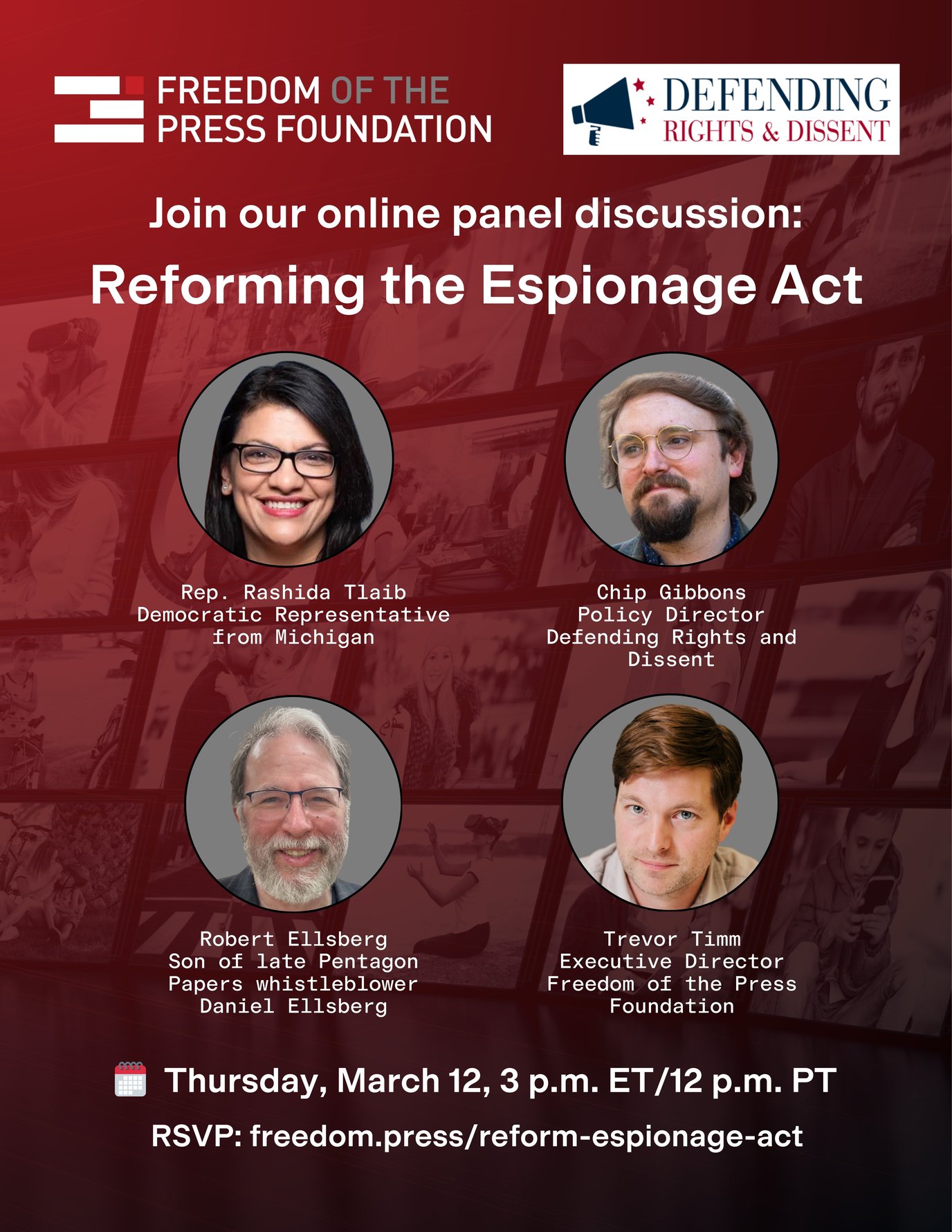
Use our action center to tell Congress to pass Rep. Tlaib’s bill to fix the arcane and dangerous Espionage Act so the government can no longer treat whistleblowers and journalists like enemy spies.