In the mid-1700s, Denis Diderot published his Encyclopédie in France, collecting the work of more than 140 authors to summarize the Enlightenment. It quickly landed on the Catholic Church’s banned books list for including contrarian thoughts, and, at one point, his publisher preemptively censored some content without Diderot’s knowledge.
Around the same time, King George III censored the first edition of Encyclopaedia Britannica, requiring the removal of some anatomically correct drawings in an article about midwifery.
So when the 13 newly independent American states ratified the First Amendment a few decades later, it laid the groundwork not only for a free press but also for an encyclopedia that was not censored by an oppressive government.
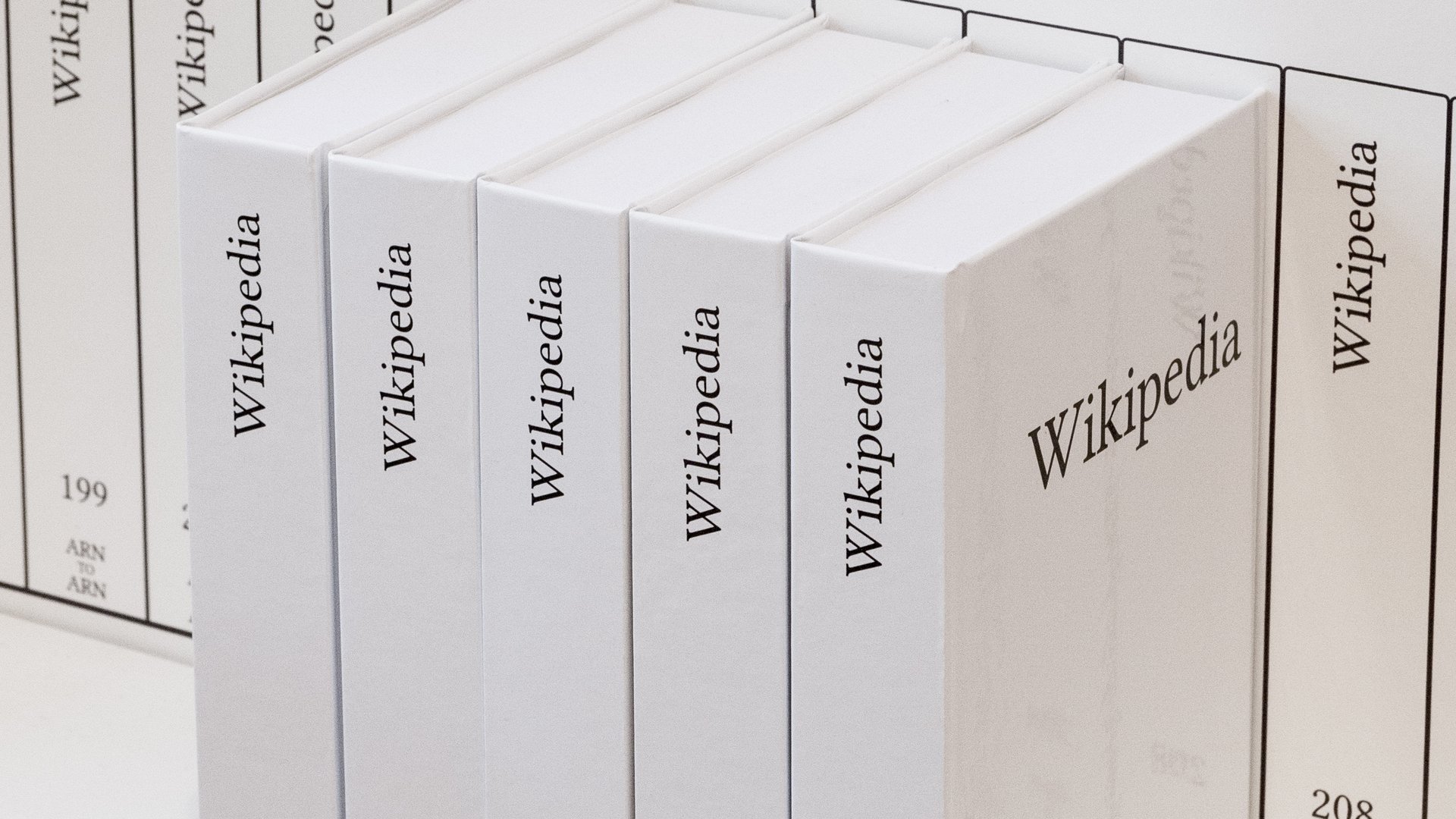
Today, we celebrate the realization of that dream in the form of Wikipedia, which over the past 25 years has been collaboratively built by unpaid strangers on the internet. Wikipedia went from the source that teachers universally clamored “you can’t trust it” to one of the most reliable sources in a world of “disinformation” and AI-generated slop.
Despite not being written by professional journalists (I edit it myself as a volunteer and used to work for its nonprofit host, Wikimedia Foundation), it’s still able to set trends and drive narratives. For example, in 2011, Wikipedia editors started collating a list of people killed by law enforcement in the U.S., three years before The Washington Post would win a Pulitzer for its version of the same.
And for better or worse, Wikipedia is most likely the largest single source powering today’s AI models. All in all, it’s the largest repository of knowledge in human history.
But it’s important to understand and appreciate that Wikipedia only exists because of the robust free speech and free press protections that exist in the United States.
Kunal MehtaBut it’s important to understand and appreciate that Wikipedia only exists because of the robust free speech and free press protections that exist in the United States.
Wikipedia has never been actively censored in the U.S., nor has any U.S.-based editor ever been arrested for their edits to Wikipedia. There’s never even been a serious threat of censorship of Wikipedia by the federal government. (The FBI once demanded Wikipedia stop using its seal under a law written to stop impersonation of federal agents; Wikipedia’s legal team laughed it off.)
The same cannot be said about Wikipedia in other countries. In France, intelligence operatives held a Wikipedia administrator until he deleted an article about a military radio station, under the guise it contained classified information. Agents made this demand even though the information in question wasn’t classified at all and was mostly based on a documentary that the French air force had worked on and publicly released.
In India, a court required Wikipedia to remove an article about a news agency because it was supposedly defamatory. To top it off, the court then demanded Wikipedia remove the separate article that was written about the court case and removal order!
This kind of censorship shouldn’t happen in the U.S. The Supreme Court ruled the First Amendment protects publishing classified information in a case about the Pentagon Papers. A U.S. court cannot order an article to be taken down, as that would be an unconstitutional prior restraint.
In the U.S., the law known as Section 230 would also protect Wikipedia from defamation claims, and instead require litigants to sue the editor who actually wrote and published the allegedly defamatory content. Those editors would be protected under the First Amendment and the high court’s New York Times v. Sullivan decision, which requires defamation claims from public officials — later expanded to public figures — to meet the much higher standard of actual malice to win (nearly every biography on Wikipedia is of a public figure, by policy).
And to state the obvious, the U.S. has never blocked all of Wikipedia, unlike China (since 2015), Myanmar (since 2021), or Turkey, which did so from 2017 until an appeal to the European Court of Human Rights forced that nation to unblock it in 2020. We know of one editor, Bassel Khartabil, who was executed for their online activity, and a few others who are incarcerated in Belarus and Saudi Arabia.
Certainly, there are plenty of people in power who wish they could censor or control Wikipedia. At first, it was through editing: In 2006, a number of Congressional staffers were caught whitewashing their bosses’ biographies, and, in 2007, someone at the FBI tried to remove images from the Guantánamo Bay detention camp article.
Then, in 2013, Edward Snowden leaked that the National Security Agency was illegally spying on Wikipedia readers and editors, revealing that the U.S. had adopted the same playbook as China. Wikipedia responded by encrypting all connections using HTTPS a few years later, and (unsuccessfully) sued the NSA for First and Fourth amendment violations.
The attacks against Wikipedia are starting to ramp up once again; last year saw ethically compromised interim U.S. Attorney Ed Martin and Sen. Ted Cruz complain about Wikipedia’s supposed left-wing bias, despite the First Amendment prohibiting the government from acting as speech police. We’ve also seen bits of the First Amendment firewall begin to crumble, with judges green-lighting prior restraints, or bipartisan groups of lawmakers working to repeal Section 230.
It will require a concerted effort by all of us to not just maintain existing First Amendment protections, but to expand them. That’s the only way Wikipedia will thrive for another 25 years.