Dear Friend of Press Freedom,
Court wins against Trump administration censorship keep stacking up. But that’s certainly not stopping them from trying. Read on for more on the week’s press freedom news.
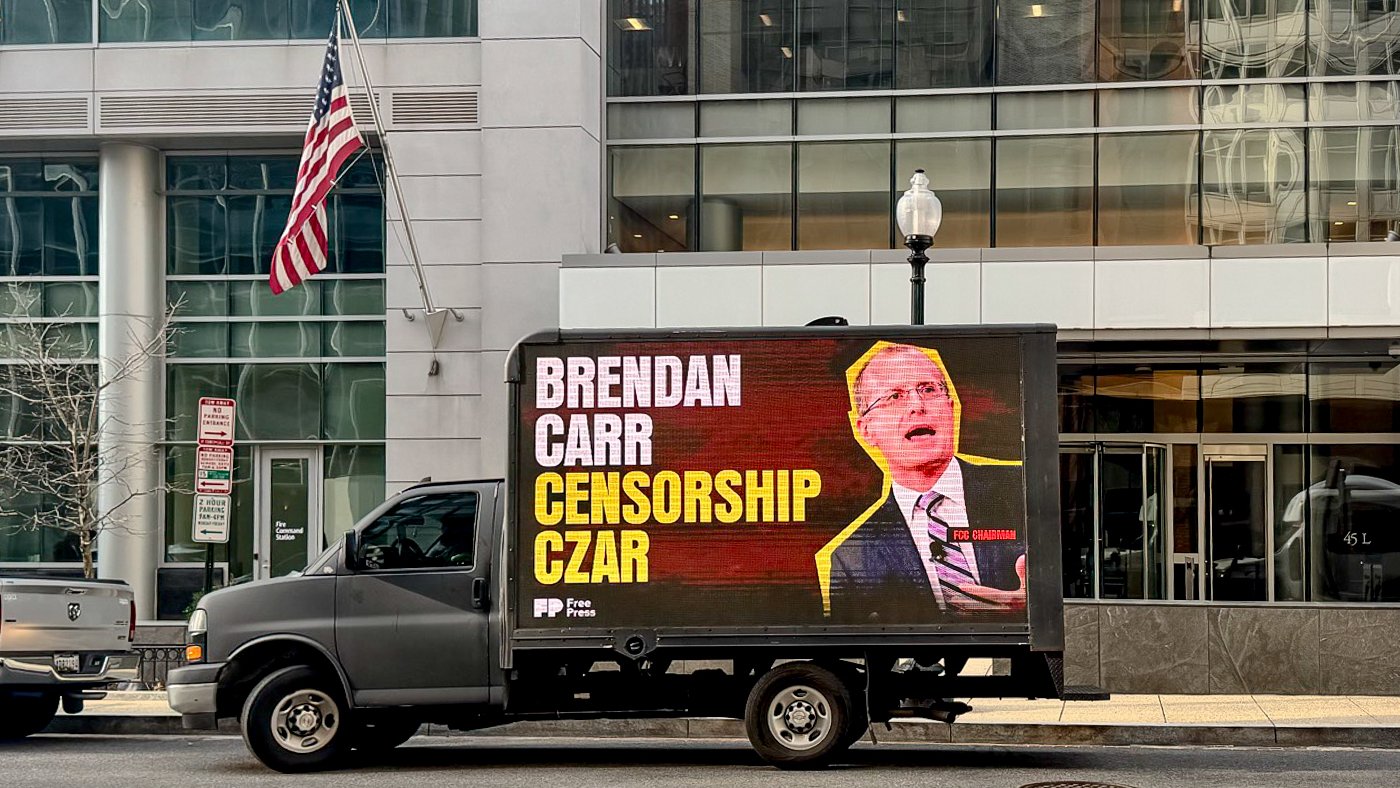
For Brendan Carr, localism is a red herring
Federal Communications Commission Chair Brendan Carr loves to talk about localism — the idea that broadcasters should serve the needs and interests of their own communities — whenever he’s confronted about his abuse of the FCC’s powers to try to censor the news.
But as we saw last week at the Conservative Political Action Conference, where he touted President Donald Trump’s “wins” against the media, localism is a red herring. As Freedom of the Press Foundation (FPF) Chief of Advocacy Seth Stern wrote in The Intercept, without exception, Carr’s threats and investigations against broadcast news outlets involve segments on national news that offend Trump. The only time he involves himself with local news is to help consolidate ownership in the hands of conglomerates known for decimating local newsrooms.
Centralizing data is about surveillance, not security
FPF Daniel Ellsberg Chair on Government Secrecy Lauren Harper joined National Public Radio’s “1A” program to talk about our lawsuit to find out how Trump’s 2025 executive order to eliminate “information silos” is really being used to create a massive centralized database to monitor the activities of Americans.
It’s sure to be abused by nefarious actors both inside and outside the government.
NPR, PBS ruling explains why all Trump censorship is illegal
A judge struck down the administration’s defunding of NPR and the Public Broadcasting Service as unconstitutional retaliation for airing content that displeased it.
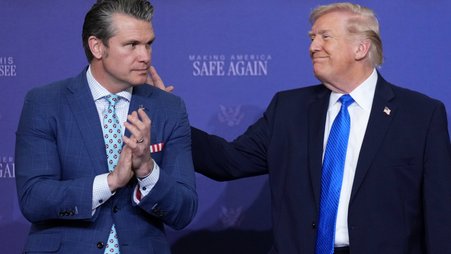
We explained in a statement that the court is exactly right — it’s well established that the government can’t condition benefits on censorship it can’t achieve directly. That goes for PBS and NPR, but it also goes for Carr shaking down broadcast licensees, Defense Secretary Pete Hegseth denying access to reporters who don’t follow his unconstitutional rules, and more.
News isn’t contraband
What if the Nixon administration hadn’t asked a court to bar The New York Times and Washington Post from publishing the Pentagon Papers, resulting in the seminal Supreme Court ruling further strengthening the law against “prior restraints”?
Rather than seeking such an extreme judicial remedy, what if President Richard Nixon had federal agents barge into the Times’ and Post’s newsrooms, seize the Pentagon Papers and all other national defense documents in the outlets’ custody, and refuse to return any of them, claiming they’re all criminal “contraband”?
Stern explained that a legal theory floated by the Biden administration in prosecuting journalist Tim Burke and now adopted by the Trump administration could lead to Trump or others censoring reporters by simply taking their stuff, without involving the courts at all.
Reform Section 702 of FISA
Section 702 of FISA, the surveillance law that allows the FBI and intelligence agencies to spy on Americans’ communications without a warrant, is up for renewal in Congress. The law has been repeatedly misused, including to monitor journalists and activists. Yet the Trump administration and some Democratic lawmakers are pushing Congress to reauthorize Section 702 without significant reforms. You can tell Congress to reject that effort with our action center.
We wrote about our recent conversation with four experts: Dell Cameron, an investigative reporter for Wired who covers privacy and national security; John Dickas, Sen. Ron Wyden’s deputy chief of staff; Trevor Timm, executive director of FPF; and Sean Vitka, executive director of Demand Progress.
What we're reading
Israeli strike on media car targets, kills 3 journalists in south Lebanon
“We have seen a disturbing pattern in this war and in the decades prior of Israel accusing journalists of being active combatants and terrorists without providing credible evidence. Journalists are not legitimate targets, regardless of the outlet they work for.”
A US journalist was kidnapped in Baghdad and a search is underway
The State Department should do everything in its power to secure the release of journalist Shelly Kittleson without escalating the illegal war that may have endangered her in the first place.
Court awards journalist $75K in damages for unlawful arrest
The ruling confirms that authorities violated Texas journalist Justin Pulliam’s constitutional rights when they arrested him and kicked him out of a press conference. Read our 2024 interview with Pulliam.
Ask a security trainer: What about NSA surveillance?
There are steps you can take to keep your communications private even if Congress renews Section 702. Our latest “Ask a security trainer” advice column offers technology measures you can implement now. You can also read about how VPN use may affect your privacy in our latest digital security newsletter.
Trump administration’s escalating attacks on media raise concerns about trust in media, self-censorship
“Nobody knows what routine conduct the administration is going to figure out a way to go after next,” Stern said. “The only discernible rule that you can figure out if you’re a journalist trying not to be targeted by this administration is to self-censor.”
Exposing financial censorship: Rainey Reitman on her new book, ‘Transaction Denied’
Kevin Gosztola interviewed FPF Board Chair Rainey Reitman about her new book on how journalists are targeted for financial censorship.