Prior restraints, or court orders prohibiting journalists from publishing news, are the “most serious” violations of the First Amendment, according to the Supreme Court. The Pentagon Papers case famously held that gagging the press is unconstitutional, even when the government claimed that The New York Times and The Washington Post reporting the secret history of its Vietnam War lies leaked by Daniel Ellsberg would damage national security.
But what if the Nixon administration had gone about it differently? Rather than seeking such an extreme judicial remedy, it could have had federal agents barge into the Times’ and Post’s newsrooms, seize the Pentagon Papers and all other national defense documents in the papers’ custody, whether from Ellsberg or another source entirely, and refuse to return any of them, claiming they’re all criminal “contraband” because the newspapers had violated the Espionage Act of 1917 by obtaining them.
There would have been no need for a prior restraint — no matter what your legal rights might be on paper, you can’t publish what you don’t possess. As one federal appellate court said in 2015, “The government need not ban a protected activity … if it can simply proceed upstream and dam the source.”
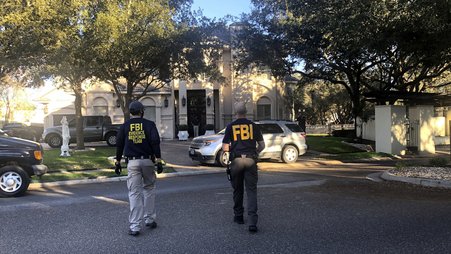
Over half a century after the Pentagon Papers, the federal government apparently believes it can do just that. In January, it raided the home of Post journalist Hannah Natanson, purportedly to investigate whether one of her alleged sources — government contractor Aurelio Luis Perez-Lugones — broke the law by leaking documents to her.
Even a targeted operation would have been problematic enough — it violates federal law for the government to seize journalists’ materials to investigate their sources’ alleged crimes. That law, the Privacy Protection Act of 1980, arose from the seizure of a few pictures taken by reporters for The Stanford Daily of a confrontation between police and protesters.
That raid seems quaint now. In Natanson’s case, the government seized terabytes of data, most of which had nothing to do with that investigation. It’s claiming that it doesn’t have to return any classified information found in her files because it’s “contraband,” like drug money or illegal guns at a crime scene.
Although it hasn’t charged Natanson with a crime, the Department of Justice contends that she, along with her source, violated the Espionage Act by possessing classified documents (the Espionage Act is actually not even limited to classified records, since the classification system didn’t exist yet when it was enacted).
Next time federal prosecutors attempt their new censorship workaround, the judiciary needs to send a strong signal that news isn’t an ill-gotten gain.
Prosecutors also cited the alleged Espionage Act violation to excuse their noncompliance with the Privacy Protection Act, although they didn’t bother to share that reasoning with the judge until he called them out for their omission.
The Department of War (it’s earned the name at this point) has taken it even further, claiming it’s criminal solicitation not only for journalists to obtain leaked documents but to merely ask questions to Pentagon personnel who aren’t officially authorized to answer them.
District Judge Paul Friedman struck down the Pentagon’s press restrictions as unconstitutional March 20 in a lawsuit brought by the Times, but the Pentagon reissued them with hardly any substantive changes and promised to appeal the ruling against the original policy. Does that mean they think they can seize interview recordings from journalists, label them fruits of a forbidden tree, and keep them forever?
Of course, people should be outraged at the Trump administration for all of this. But, unfortunately, this contraband nonsense didn’t originate with Trump.
During the Biden administration, federal prosecutors floated a strikingly similar theory in the prosecution of Tim Burke, a Florida journalist, known for breaking the Manti Teʻo catfishing story back in 2013, who was charged with computer crimes for obtaining unaired outtakes of antisemitic rants by Ye (formerly Kanye West) during an interview with then-Fox News host Tucker Carlson. The most serious charges against Burke have been dismissed, but the government is appealing.
The government argued in Burke’s case, like in Natanson’s, that other materials having nothing to do with the investigation at hand could be permanently confiscated from Burke because they may constitute “contraband” from unspecified computer crimes. No judge has determined that any illegality occurred in either case, but both journalists have been restrained from pursuing countless stories because they simply don’t have their work.
In Natanson’s case, the notion that a journalist or publisher can violate the Espionage Act by obtaining government secrets in the first place is a red line that many administrations decided against crossing in prior decades. It was legitimized by the Biden administration’s extraction of a plea deal from WikiLeaks publisher Julian Assange over his publication in 2010 of documents that exposed war crimes and abuses during the Iraq War, despite warnings from leading newspapers, law professors, and other First Amendment advocates.
And now that reasoning is apparently being extended to not just obtaining leaked documents but asking questions to anyone but a PR flack.
This contraband nonsense didn’t originate with Trump.
Rep. Rashida Tlaib has introduced an excellent bill to rein in Espionage Act abuses — named after Ellsberg, whose own prosecution was thrown out due to prosecutorial misconduct. And Sen. Ron Wyden and Rep. Becca Balint have new legislation to plug the holes in the Privacy Protection Act that allow illegal raids to slip through the cracks of the judicial system. But things are moving quickly. The bills are unlikely to advance before the administration does more damage.
The Pentagon Papers case stands for the proposition that the government cannot suppress the publication of truthful information of public concern, even when it would very much like to. The contraband theory is an attempt to achieve the suppression indirectly — by redefining journalists’ work product as something illicit that the government can confiscate.
Courts shouldn’t let it get that far. In the Natanson case, Judge William Porter in February rightly referred to the seizure of Natanson’s materials as a prior restraint. But he didn’t order them immediately returned, and he didn’t sanction federal prosecutors for making such absurd legal arguments (or for failing to disclose the Privacy Protection Act).
Next time federal prosecutors attempt their new censorship workaround, the judiciary needs to send a strong signal that news isn’t an ill-gotten gain and prior restraints in any form won’t be tolerated in this nation’s courthouses.
Judge Friedman will soon have the opportunity to do just that. The Times has filed a motion to compel the Pentagon to comply with his order to stop retaliating against journalists for doing their jobs, referring to the government’s conduct as “the definition of contempt.” Friedman should show the government the definition of sanctions.